Israel and the Jewish people: roots, memory and choosing life
How do you tell the story of finding a home when so much of the journey runs through fear? This is the story many Jews and Israelis know: connection to the land, exile, persecution, independence and wars. We also follow the choices people made here to pursue peace, and the chapters we find harder to tell.
19 min read
This page also discusses war, violence and loss. You can choose a chapter and read at your own pace.
Choose a chapter
Sources for this context
Both stories on one timeline
Choose a period and compare chapters from both stories. Dates beside each link show the chapter’s span, not the date of a single event. Chapters spanning several periods appear where they begin.
1897–1946Zionism, the Holocaust and the revolt
The Palestinian story
1947–19661948 and life after the war
The Israeli story
1967–19861967, wars and peace with Egypt
The Israeli story
1987–1999Intifada, mutual recognition and Oslo
2000–2022The second intifada and Gaza
The Israeli story
The Palestinian story
2023–today7 October and the war in Gaza
The Israeli story
The Palestinian story
A voice from the archive
peace between states is peace between peoples.
Speech excerpt
Roots you can see, a memory you can hear
The Jewish bond with this land is older than modern Israel by thousands of years. You can see it in stone: Assyrian reliefs record the siege of the Judean city of Lachish in 701 BCE.1 And on parchment: the Dead Sea Scrolls preserve Jewish writing and belief from the Second Temple period.2
The land also lives in Bible stories, in Hebrew and in prayers facing Jerusalem. Faith and history are different kinds of knowledge, and you can understand a bond without sharing a faith. At the Passover table, families still tell the story of slavery and freedom through questions and food.3 And there is no single way to be Jewish: religious or secular, Ashkenazi, Sephardi, Mizrahi or other.
Exile: a home, and a danger
For generations Jewish communities lived across the Middle East, North Africa, Europe and beyond, writing, trading and arguing with their neighbours. The Iraqi Jewish Archive keeps the record of that life, and of its end.4 According to Israel’s foreign ministry, more than 850,000 Jews were forced out of Arab countries and Iran in the twentieth century;5 almost 120,000 left Iraq in 1950–1951 alone, according to the US National Archives.4
Antisemitism, hostility to Jews because they are Jews, took many forms: libels, restrictions, violence and expulsions, from England in 1290 to Spain in 1492.6 Pogroms struck Jews in the Russian Empire;7 in Baghdad’s Farhud, on 1–2 June 1941, Jews were attacked and robbed.8 Not every society was hostile, but the slide from belonging to danger could be fast. That is part of why home and self-defence matter so much in Jewish memory.
Remembering the victims does not make the attackers’ descendants, or a whole religion, guilty forever. And criticising Israel’s government is not in itself hatred of Jews; Jews as a whole are not responsible for what that government does.
The Holocaust
Between 1933 and 1945 Nazi Germany, with its allies and collaborators, persecuted the Jews of Europe and murdered about six million of them. Families, communities and whole cultural worlds were wiped out.9
That memory helps explain how deep the Israeli need for security runs. Zionism came before the Holocaust; Israel is not only an answer to catastrophe, but also a national dream and a life built.
Zionism: an old longing becomes a plan
In the late nineteenth century Zionism became a modern national movement; Theodor Herzl gathered the First Zionist Congress in Basel in 1897.10 In the Balfour Declaration of 2 November 1917, Britain backed a national home for the Jewish people in Palestine, provided nothing prejudiced the civil and religious rights of the non-Jewish communities there.11 In 1922 the League of Nations made Britain responsible for carrying it out.12
But the land was not empty. Arabs lived there too, with homes, fields, towns and deep roots. The clash of two national hopes is not a footnote to this story; it is the story.
The clash turned violent before the state existed. In 1920 and 1921 riots against Jews broke out in Jerusalem and Jaffa.1314 In August 1929, 133 Jews were killed, 67 of them murdered in Hebron; 116 Arabs were also killed, most by British fire.1516 In 1936–39 Arabs rose against the British and also attacked Jews and Jewish communities.17 On the Jewish side too, some targeted civilians: Irgun attacks in those years, including bombs in Haifa markets in 1938, killed dozens of Arabs.18 The conflict did not begin in 1948; in 1948 it became a war.
In the Palestinian story1929 and 1936–1939: blood and revolt
1947–1948: dancing in the streets, then war
On 29 November 1947 the UN General Assembly recommended a Jewish state, an Arab state and an international Jerusalem, by 33 votes to 13.1920 The Jewish leadership accepted the plan; the Palestinian Arab leadership and the Arab states rejected it as unjust to a country with an Arab majority.21 In Israeli memory, that was the night people danced in the streets.
Fighting broke out at once, while Britain still ruled.21 According to Israel’s foreign ministry, local Arabs and irregulars from neighbouring states attacked Jewish communities.22 Three years after the Holocaust, Israelis remember those months as a war for survival itself. By 1949 the Jewish side had lost about 4,000 fighters and 2,000 civilians, roughly one in every hundred people.22
And the part the Israeli story tends to skip: in the same months, before the state was declared, Palestinian Arabs were already losing their homes. According to the Israeli historian Benny Morris, about 75,000 had left by April 1948 and about a quarter of a million more fled by June; in July Israeli forces expelled 40,000 to 50,000 people from Lydda and Ramle. He puts the total at just over 700,000 refugees.23 How much of it was planned is still argued over; the Palestinian story goes into it.
On 14 May 1948 David Ben-Gurion declared the State of Israel.24 Arab armies crossed into the former Mandate (Israelis call it an invasion; Arab accounts speak of the Arab armies entering Palestine).21 The war ended in 1949 with armistice agreements, not peace; the Arab state never arose, and Jordan held the West Bank and Egypt held Gaza.21
Ben-Gurion: the builder, and the hard decisions
David Ben-Gurion, the first prime minister, led the state through that war. To many Israelis he is the man who turned a dream into a state; in 1953 he moved to Sde Boker in the Negev, to show where he thought the future lay.25
He also led the hardest decisions of 1948. On 16 June his government decided not to allow a mass return of the refugees. According to Morris, Ben-Gurion supported “transfer”, although not all his colleagues agreed.23 You can value what he built and still see the price that others paid.
The Declaration of Independence promised equal rights and freedom of religion, conscience, language and education.26 It is a standard to judge the state by. For many Jews 1948 is the year of national revival; for many Palestinians, the Nakba. Both are real, and neither requires blurring a fact.
1949–1967: newcomers, military rule and weeks of fear
The young state took in hundreds of thousands: Holocaust survivors, and Jews who left Arab countries or were driven out of them. According to the US National Archives, almost 120,000 Jews left Iraq in 1950–1951.4 According to Israel’s foreign ministry, more than 47,000 came from Yemen.5 Today, the ministry says, the descendants of Jews from Arab countries and Iran are the majority of Israel’s Jews.5 Anyone who sees Israelis as “Europeans” is missing this.
A chapter seldom told: from 1948 until 1966 many Arab citizens of Israel lived under military government, chiefly in the Galilee, the Triangle and the Negev, until Prime Minister Levi Eshkol announced its end on 8 November 1966,2728 although the Declaration of Independence had promised equality.26
In 1956, after Egypt’s President Nasser nationalised the Suez Canal, Israel attacked in Sinai on 29 October in a secret plan with Britain and France; American pressure brought a ceasefire on 6 November.29 Israelis remember “Operation Kadesh” as an answer to cross-border raids and to the blocking of the sea route to Eilat; Egyptians call it the Tripartite Aggression.
In May 1967 Egypt massed troops in Sinai, demanded that the UN force leave and closed the Straits of Tiran to Israeli ships.30 In Israeli memory these are “the weeks of waiting”: reservists called up, empty streets, and fear of annihilation 22 years after the Holocaust.
In the Palestinian story1949–1967: camps, borders and the PLO
1967: six days, and the start of the occupation
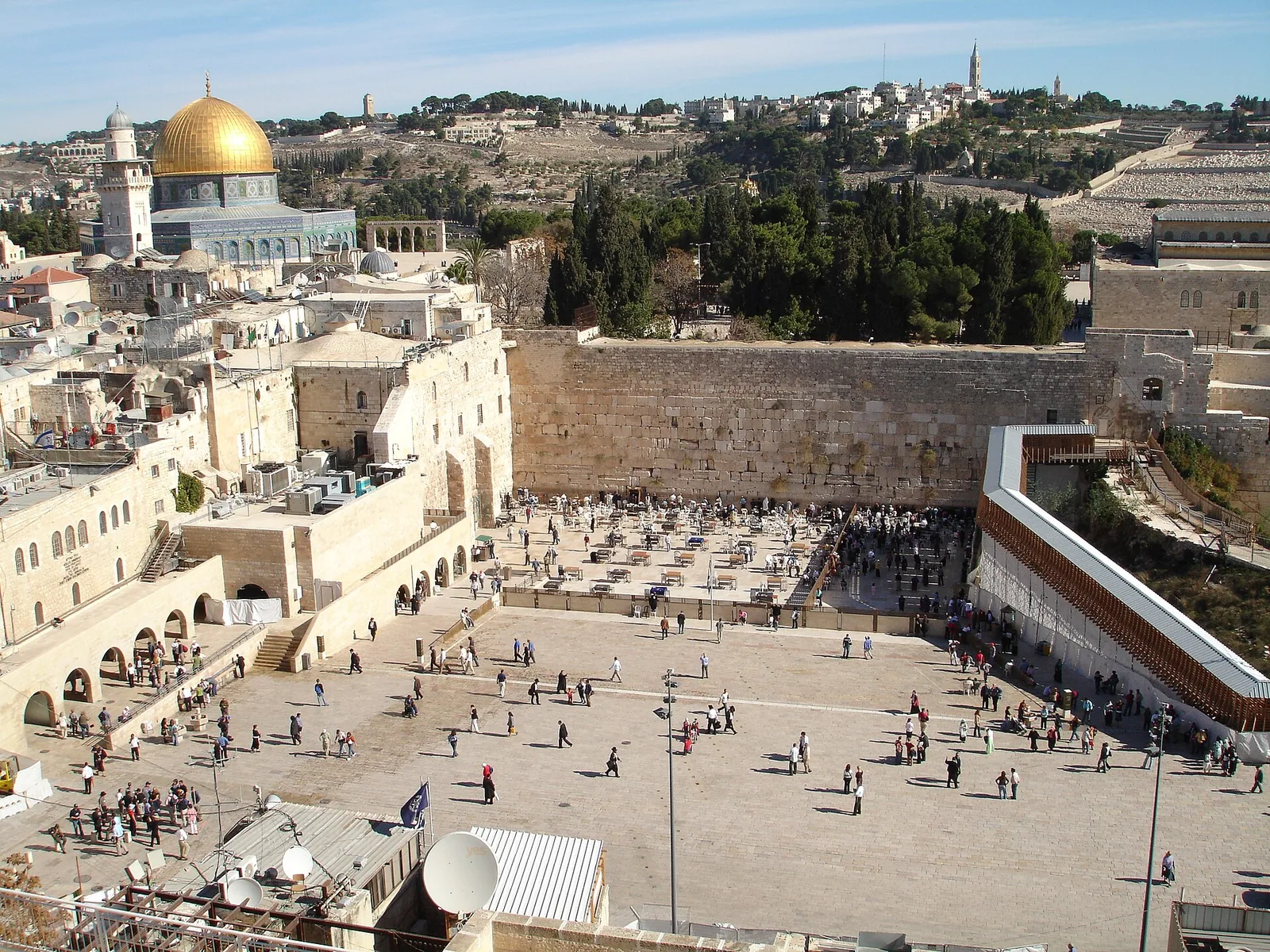
On 5 June 1967 Israel launched an air attack that it calls pre-emptive, and by 10 June it had won.31 It captured Sinai and Gaza from Egypt, the West Bank and East Jerusalem from Jordan, and the Golan Heights from Syria.30 In Israel it felt like deliverance: from fear of annihilation to the Western Wall within a week. In the Arab world it is the Naksa, the setback.31
It was also how the occupation began: a large Palestinian population came under Israeli military rule. On 19 June 1967 the government adopted a position on peace with Egypt and Syria based on the international border and security arrangements; in October it changed its position.32 What was actually conveyed to the Arab side is discussed on the Resolution 242 page, alongside the dispute over the meaning of the Khartoum summit. Resolution 242 followed in November, and the Jarring and Rogers efforts produced no agreement.
Israel also began to build settlements, and Israelis have argued about them ever since. Some see Judea and Samaria as the heart of the Jewish story and as strategic depth. Others see lasting rule over another people as a danger to Israeli democracy and its moral character. For the 2024 advisory opinion, see the Palestinian timeline. The advisory opinion is not itself binding; it interprets obligations under international law.33
In the Palestinian story1967: the Naksa and the start of the occupation
October 1973: sirens on Yom Kippur
On 6 October 1973, on the holiest and quietest day of the Jewish year, the sirens went off.34 Egypt and Syria attacked Israeli forces in Sinai and on the Golan; after setbacks in the first days the war ended in an Israeli military victory.35 About 2,656 Israeli soldiers were killed and more than 7,200 wounded.34 In Egypt and Syria it is remembered as a war to win back the land lost in 1967.
In Israel it is “the failure” (ha-mehdal): a shock that broke the confidence of 1967; protests and the Agranat Commission led to the government’s resignation.34 And out of this war came diplomacy: the Geneva Conference, the Sinai agreements, the Golan disengagement, and at the end of that road, peace with Egypt.35
In the Palestinian storyThe PLO and the armed struggle: from Karama to Beirut
The 1970s: terror against civilians
In the 1970s Israelis learned a new kind of fear: attacks aimed on purpose at civilians. At the Munich Olympics in September 1972, members of the Palestinian group Black September attacked the Israeli team;36 11 of its members were murdered.37 On 15 May 1974 gunmen of the Democratic Front for the Liberation of Palestine seized Netiv Meir School in Ma’alot and took pupils hostage. During the rescue attempt the gunmen murdered 22 of the pupils; among the others murdered in the attack were three members of the Cohen family, killed earlier in their home.3839
On 11 March 1978 a Palestinian squad that had come by sea from Lebanon landed near Ma’agan Michael, hijacked a bus on the Coastal Road and fired on the passengers. According to the foreign ministry, 38 civilians were murdered, 13 of them children.37 Three days later Israel launched Operation Litani to destroy the PLO bases in southern Lebanon; by the army’s account it met its aims on the ground without wiping out that infrastructure, the UN Security Council called on Israel to withdraw and set up the UNIFIL force, and Israel pulled out in June.4041
So for many years, “PLO” meant terror in Hebrew. Only in 1993 came the letters of mutual recognition: the PLO recognised Israel’s right to exist in peace and security, and the Government of Israel recognised the PLO as the representative of the Palestinian people. What changed on the Palestinian side in between is told in the PLO’s road, 1974–1988. And the site’s rule applies here as everywhere: a deliberate attack on civilians is terror, whoever commits it.
In the Palestinian storyThe PLO and the armed struggle: from Karama to Beirut
Peace with Egypt, war in Lebanon
Peace with Egypt
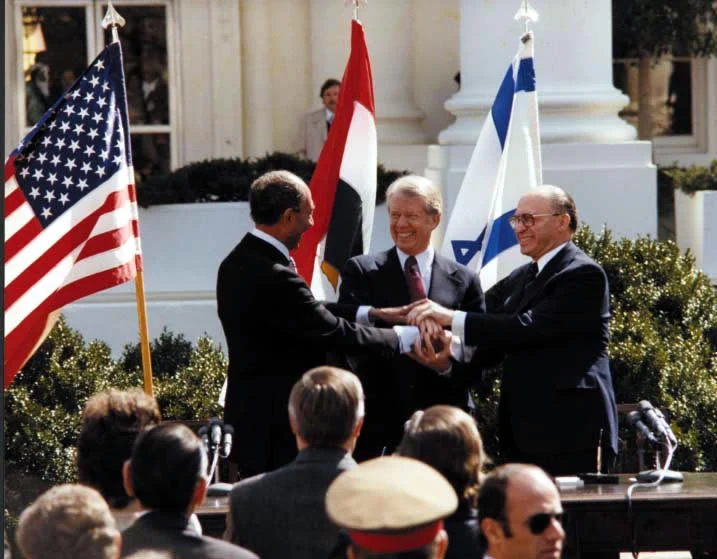
In November 1977 Egypt’s President Anwar Sadat came to Jerusalem and spoke in the Knesset. In March 1978, 348 reserve officers and soldiers wrote to Menachem Begin urging him not to miss the chance, and Peace Now was born from that letter.42 After Camp David came the peace treaty of 1979. Israel gave back Sinai (Taba only in 1989, after arbitration43), and in April 1982 it removed by force the town of Yamit, which it had built there.44 The largest Arab state, which had fought Israel from 1948 to 1973, became a neighbour at peace, and still is.

1982: war in Lebanon
In June 1982 Israel invaded Lebanon and besieged Beirut.45 The government called it “Operation Peace for Galilee” and presented it as pushing the PLO away from the northern border. It was the first war Israelis argued about while it was still being fought.
Sabra and Shatila and Israeli responsibility
On 16–18 September 1982 the Phalange, a Lebanese Christian militia allied with Israel, massacred Palestinians in the Sabra and Shatila camps in Beirut, after Israel’s defence minister had approved their entry.46 According to Peace Now, 400,000 people then demonstrated in Tel Aviv for an inquiry, an organisers’ estimate that is disputed.42 The Kahan Commission found that Israel bore indirect responsibility and that Defence Minister Ariel Sharon had ignored the danger of bloodshed, and recommended that he resign.46 The 1983 agreement with Lebanon never came into force.
1985–2000: withdrawal in stages
In 1985 Israel pulled back partly, but it held a strip of southern Lebanon with the South Lebanon Army until 2000.41 Against Hezbollah rockets on the north it launched two big operations, Accountability (1993) and Grapes of Wrath (1996), to press Lebanon to rein the group in.4748 In 1996 Hezbollah fired hundreds of rockets at Israel, and Israeli fire killed more than 120 Lebanese civilians, most of them when shells hit the UN compound at Qana.4841 Israel said it was an error; a UN inquiry doubted that.49 The operations ended in the “April Understanding”, which cut harm to civilians on both sides but did not end the fighting; in May 2000 Israel left Lebanon altogether.504741
In the Palestinian storyThe PLO and the armed struggle: from Karama to Beirut
Oslo: hope, and then the buses
In December 1987 the first intifada broke out in the West Bank and Gaza, a popular uprising against the occupation.51 Many Israelis, among them soldiers sent to police civilians, came to feel that the situation of 1967 could not go on without a price. In 1988, after the PLO accepted Resolution 242, 100,000 Israelis demonstrated for talks with it, according to Peace Now.42
…we say to you today in a loud and a clear voice: enough of blood and tears. Enough.
After the Madrid Conference came the mutual recognition and the Oslo Accord of 1993. The Knesset approved it by 61 votes to 50:52 half the country hoped, and half feared. In 1994 came peace with Jordan. For a moment the whole conflict seemed close to an end.
Then came blood and fear. On 25 February 1994 Baruch Goldstein, a settler from Kiryat Arba and a member of Kach, murdered 29 Muslim worshippers at the Ibrahimi Mosque (the Cave of the Patriarchs) in Hebron in a terrorist massacre.5354 From April 1994 Hamas and Islamic Jihad carried out suicide bombings; in October 1994, 22 people were killed on the No. 5 bus on Dizengoff Street in Tel Aviv.55 In February and March 1996, another 59 people were killed in four Hamas suicide bombings, most of them on buses and at a shopping centre.55 Israelis who had backed the accord were now afraid to board a bus.
On 4 November 1995, at the end of a peace rally in Tel Aviv, Prime Minister Yitzhak Rabin was murdered by Yigal Amir, a Jewish Israeli who opposed Oslo.56 Shimon Peres took over and lost the election of May 1996.56 The killer came from inside, and Israelis have to tell themselves that too. But the murder alone did not decide the fate of the process.
In the Palestinian storyThe Oslo years and the second intifada
The second intifada: buses, cafés and a barrier
In July 2000 the Camp David summit ended without an agreement; violence broke out after Ariel Sharon visited the Temple Mount (Haram al-Sharif) on 28 September.57 For Israelis, the second intifada means suicide bombings on buses and in cafés, restaurants and shopping centres. According to B’Tselem, between September 2000 and September 2010 Palestinians killed 1,083 Israelis, 741 of them civilians.58
In the same decade, again by B’Tselem’s count, Israeli security forces killed 6,371 Palestinians, at least 2,996 of whom were not taking part in hostilities; the count includes later fighting in Gaza.58 Most Israelis lived those years as a war for their homes; most Palestinians lived them differently, as their story tells.
The bombings broke something, above all among Oslo’s supporters. Many concluded that there was “no partner”: we made an offer, and got explosions. That conclusion is disputed within Israel and is central to understanding Israeli politics. In a joint poll in 2020, 79% of Israeli Jews and 90% of Palestinians said the other side could not be trusted.59
In March 2002 a wave of Palestinian bombings, most of them suicide attacks, peaked with the Passover bombing in Netanya, which killed 30 people;60 Israel answered with Operation Defensive Shield and re-entered the big West Bank cities, with the aim, in the government’s words, of defeating the infrastructure of terror and preventing more attacks.61 According to the UN Secretary-General’s report, the operation and its aftermath, from 1 March to 7 May, cost the lives of 497 Palestinians, and the battle in the Jenin refugee camp killed at least 52 Palestinians, up to half of them possibly civilians, and 23 Israeli soldiers; claims by Palestinian Authority officials of 500 or more dead in the camp were not borne out by the evidence, the report found.62
In June 2002 the government decided to build the separation barrier, which many Israelis credit, together with army operations, for the fall in attacks. But about 85% of its route runs inside the West Bank rather than on the Green Line, and according to B’Tselem it has cut some 150 Palestinian communities off from their land.63
In the Palestinian storyThe Oslo years and the second intifada
2005: we left Gaza
In the summer of 2005 Israel left Gaza in a unilateral step, the disengagement: all 21 settlements in the Strip, home to about 8,500 people, and four in the northern West Bank were evacuated. About 55,000 soldiers and police were sent to remove Israeli citizens from their homes, and Israeli society was torn.64
The rockets did not stop. By a figure Human Rights Watch cites, about 2,700 were fired from Gaza between September 2005 and May 2007, most often at Sderot; the organisation found that deliberate or indiscriminate fire at civilians is a war crime.65 In June 2007 Hamas seized the Strip.66
After 2007 the rockets and mortars kept coming, and Israel fought several large rounds in Gaza, among them Cast Lead (2008–2009), Pillar of Defense (2012), Protective Edge (2014) and Guardian of the Walls (2021).676869 There were earlier operations too, such as Summer Rains in 2006, after armed groups from Gaza abducted the soldier Gilad Shalit.7071 Each time, as analysts at Israel’s Institute for National Security Studies (INSS) described them, the aims were much the same: stop the fire, hit Hamas and the other armed groups hard, and restore deterrence for another period of quiet.72 Each round ended in a ceasefire, usually mediated by Egypt, and each cost lives on both sides; according to UN figures, the great majority of the dead were Palestinian.737274 In this site’s careful summary, the quiet each round bought was partial and temporary; Israeli analysts at INSS and the Begin-Sadat Center (BESA) describe a policy of managing the conflict rather than solving it, until deterrence collapsed on 7 October.6975
Hence the sentence almost every Israeli knows: “We left Gaza, we got rockets, and in the end we got 7 October.” Anyone who wants Israel to withdraw again has to face it. Its critics, Israeli and Palestinian, answer that the exit was unilateral, with no agreement; that Israel kept control of the land perimeter, the airspace and the sea;64 and that after 2007 it blockaded the Strip.66 Both arguments rest on facts; the disagreement is over the lesson.
In the Palestinian storyGaza, 2005–2023: disengagement, split and blockade
7 October 2023 and since
On 7 October 2023 the terrorist organisation Hamas led a terrorist attack in Israel in which innocent civilians were murdered and hostages were taken.76 According to Israeli government figures, about 1,200 people were killed and 251 were abducted to Gaza.77 For many Israelis it was the darkest day since 1948: the state created so that Jews would never again be defenceless did not protect its citizens in their own homes.
Since that day Israel has lived with the hostages. The last 20 living hostages came home in October 2025, under the ceasefire, after about two years in captivity;77 the bodies of those who did not survive had been returned by the end of January 2026.78 More than 300,000 reservists were called up, and tens of thousands of people were evacuated from their homes in the south and the north.79 According to the army, 468 soldiers were killed between the start of the ground offensive, on 27 October 2023, and the ceasefire.77
Israelis were divided over the war itself. In an Israel Democracy Institute poll at the end of August 2025, about two-thirds backed a deal to free the hostages in return for ending the fighting and a full withdrawal: 62% of Jews and 81% of Arabs.80 The argument goes on. Some hold that only the defeat of Hamas will bring security; others, that the war went far beyond what security required.
And there is a price the Israeli story finds hard to look at. Israeli military operations in Gaza killed at least 67,869 Palestinians by the ceasefire of October 2025, among them 20,179 children, according to the Health Ministry in Gaza;77 that count does not distinguish civilians from combatants.81 Hamas is not the Palestinian people, and guilt for terror does not pass to a whole public. What the people of Gaza went through is told in the Palestinian story and on the ceasefire page.
The site’s vision — not a forecast and not a description of an existing agreement
What Israelis fear, what would help them trust, and why try anyway
The preceding chapters describe events that shape fears in Israeli memory: the Holocaust, the wars of 1948 and 1973, terrorist attacks, rocket fire and the terrorist attack of 7 October. Israelis also disagree about the conclusions. Some fear withdrawal would bring further violence; others see a political agreement as a way to reduce it. The question in that debate is which arrangements could protect people’s lives over time.
Take a simple question: what happens on the day one side suspects the agreement has been broken? Who checks, who talks to whom, and what prevents the next shooting? The agreements on this site offer different ways to address these problems. The Palestinian story raises further demands: ending the occupation, independence and freedom of movement. A future people can live in will need to address those demands alongside Israeli security.
Israel is the national home of the Jewish people and the state of all its citizens, Jewish and non-Jewish; some of them define themselves as Palestinian. The site’s position is clear: Israel has the right to exist as an independent and secure state, and the Palestinian people have the right to an independent state, to security and to dignity. Our bond with the land does not erase theirs.
This land is holy to Jews, Muslims and Christians. We do not speak in God’s name, and nobody has to agree about faith in order to protect life together. No faith is a licence to harm another person.
Why keep going? Because the same story includes Egypt, which fought Israel from 1948 to 1973, and peace with it since 1979. It includes Jordan, which followed in 1994. There were many attempts that did not reach agreement along the way. With the Palestinians, military victories and unilateral withdrawal have not ended the conflict. The hard work of reaching agreement remains. We believe it is worth persisting, so people on both sides of the border can worry less about those they love.
In the Palestinian storyWhat Palestinians ask for, and what this site stands on
Sources
Open the sources, compare and check for yourself.
What can this source tell us?
A document shows what was written; testimony tells what someone saw or remembers; research and reporting add interpretation and comparison. Always ask who produced the information and what still needs checking. The label alone does not establish quality, and two sites copying one document still give you one source.
Practise checking sourcesShow all sources (83)Hide the sources
Cited on this page
- A Researcher’s Guide to the Lachish CollectionResearch British Museum
- The Leon Levy Dead Sea Scrolls Digital LibraryOfficial archive Israel Antiquities Authority
- PassoverResearch National Library of Israel
- Iraqi Jewish Archive — After MillenniaOfficial archive U.S. National Archives
- Jewish refugees expelled from Arab lands and from IranReference Israel Ministry of Foreign Affairs — Mission of Israel to the EU and NATO
- AntisemitismResearch United States Holocaust Memorial Museum
- PogromsResearch United States Holocaust Memorial Museum
- The FarhudResearch United States Holocaust Memorial Museum
- Introduction to the HolocaustResearch United States Holocaust Memorial Museum
- The Zionist MovementResearch National Library of Israel
- Balfour Declaration, November 2, 1917Primary Avalon Project, Yale Law School2 November 1917
- The Palestine MandatePrimary Avalon Project, Yale Law School24 July 1922
- The Origins and Evolution of the Palestine Problem, Part I: 1917–1947Reference United Nations (CEIRPP / UNISPAL)
- Haycraft Commission of Inquiry into the 1920–21 Arab Riots (October 1921)Primary Jewish Virtual LibraryOctober 1921
- Glossary: 1929 riots (Western Wall disturbances), citing the Shaw CommissionReference Just Vision
- The Hebron Massacre of 1929Reference Jewish Virtual Library
- Great Palestinian Rebellion, 1936–1939Research Institute for Palestine Studies / Palestinian Museum — Interactive Encyclopedia of the Palestine Question (PalQuest)
- List of Irgun attacks — used only as a pointer to J. Bowyer Bell, Terror out of Zion (1977), and Perliger & Weinberg (2003)Reference Wikipedia
- Resolution 181 (II): Future government of Palestine (Plan of Partition with Economic Union), 29 November 1947Primary United Nations General Assembly29 November 1947
- Palestine question at the UN (1947–1975): CEIRPP historical backgrounder (A/AC.183/L.3)Official archive United Nations — Committee on the Exercise of the Inalienable Rights of the Palestinian People (UNISPAL)
- The Arab-Israeli War of 1948Research U.S. Department of State — Office of the Historian
- The War of Independence (1948)Reference Israel Ministry of Foreign Affairs
- 1948 Refugees: Proceedings of an International Workshop, Session 1 (summary of Benny Morris, “The Birth of the Palestinian Refugee Problem, 1947–49”)Research Israel Law Review 51(1), Cambridge University PressMarch 2018
- Creation of Israel, 1948Research U.S. Department of State — Office of the Historian
- About Ben-Gurion’s Desert HomeResearch Ben-Gurion’s Desert Home
- Declaration of Israel's Independence 1948Primary Avalon Project, Yale Law School14 May 1948
- Abolition of the Military Governance of Arab-Populated Areas in Israel (1966)Research Economic Cooperation Foundation (ECF)
- שחר גורני, 1966 — ביטול הממשל הצבאי בשטחי מדינת ישראלResearch Israel Defense Forces — Military Advocate General
- The Suez Crisis, 1956Research U.S. Department of State — Office of the Historian
- The 1967 Arab-Israeli WarResearch U.S. Department of State — Office of the Historian
- Six-Day WarReference Encyclopaedia Britannica
- Israeli government resolution of 19 June 1967 (ECF database, entry 89)Research Economic Cooperation Foundation (ECF)
- Israel’s continued occupation of Palestinian territory ‘unlawful’: UN world courtPrimary United Nations in Palestine20 July 2024
- The Yom Kippur War (online publication)Official archive Israel State Archives
- The 1973 Arab-Israeli WarOfficial archive U.S. Department of State, Office of the Historian
- Munich massacreReference Encyclopaedia Britannica
- 32nd anniversary of the Coastal Road massacreReference Israel Ministry of Foreign Affairs11 March 2010
- Yosef (Zozo) Cohen: memorial biography and account of the Ma’alot attackReference National Insurance Institute of Israel, Memorial site for civilian victims of hostile acts
- Democratic Front for the Liberation of PalestineReference Encyclopaedia Britannica
- Operation LitaniReference Israel Defense Forces
- UNIFIL BackgroundPrimary United Nations Interim Force in Lebanon (UNIFIL)
- Who We AreReference Peace Now (שלום עכשיו)
- TabaReference Encyclopedia.com (Encyclopedia of the Modern Middle East and North Africa)
- The Yamit EvacuationReference Jewish Virtual Library
- Sami Moubayed, The 17 May Agreement of 1983: a perfect failurePress Al Majalla17 May 2023
- Report of the Commission of Inquiry into the Events at the Refugee Camps in Beirut, 8 February 1983Primary Commission of Inquiry into the Events at the Refugee Camps in Beirut (Kahan Commission); text hosted by the Jewish Virtual Library8 February 1983
- The 1996 “Grapes of Wrath” Ceasefire Agreement and the Israel-Lebanon Monitoring GroupResearch Institute for National Security Studies (Marc Finaud)
- Israel/Lebanon: “Operation Grapes of Wrath”: The Civilian VictimsResearch Human Rights Watch1997
- Letter dated 7 May 1996 from the Secretary-General (S/1996/337): report of his military adviser on the shelling of the UN compound at QanaPrimary United Nations Security Council (UNISPAL)7 May 1996
- Israel-Lebanon Ceasefire Understanding (English text), 26 April 1996Primary Economic Cooperation Foundation26 April 1996
- First Intifada and Israeli-Palestinian Negotiations, 1987–1993Research Institute for Palestine Studies / Palestinian Museum — PalQuest
- Chronological Review of Events Relating to the Question of Palestine, September 1993Primary United Nations, Division for Palestinian Rights (UNISPAL)September 1993
- Yearbook of the United Nations 1994 (excerpts), Hebron massacreReference United Nations1994
- Report of the Special Committee to Investigate Israeli Practices, A/78/553, paragraph 11 (pp. 5–6)Primary United Nations General Assembly25 October 2023
- List of suicide bombings in Israel since the 1993 accordsPress Jewish Telegraphic Agency (JTA)31 July 1997
- Rabin's Assassination (1995)Research Economic Cooperation Foundation (ECF)
- The Oslo Accords and the Arab-Israeli Peace ProcessOfficial archive US Department of State, Office of the Historian
- 10 years to the second Intifada – summary of data (press release, 27 September 2010)Reference B'Tselem27 September 2010
- The Palestinian-Israeli Pulse: A Joint Poll (August 2020)Research Palestinian Center for Policy and Survey Research (PSR) and Tel Aviv University2020
- מיכאל אמו־קרים קרים ז״ל — תיאור הפיגוע במלון פארקPrimary National Insurance Institute of Israel — Laad memorial
- Report of the Secretary-General prepared pursuant to General Assembly resolution ES-10/10 (A/ES-10/186): Jenin and other Palestinian citiesPrimary United Nations General Assembly30 July 2002
- Report of Secretary-General on recent events in Jenin, other Palestinian cities (press release SG/2077)Primary United Nations (UNISPAL)1 August 2002
- The Separation BarrierReference B'Tselem
- Israel's Disengagement from Gaza (RS22000)Research Congressional Research Service16 September 2005
- Rockets from Gaza: Harm to Civilians from Palestinian Armed Groups’ Rocket AttacksResearch Human Rights Watch6 August 2009
- Timeline: 20 years of Hamas rule in Gaza, from election to political exitPress Al Jazeera8 July 2026
- Israel and Hamas: Another Round of Conflict (IN10104)Research Congressional Research Service (Jim Zanotti)18 July 2014
- Key figures on the 2014 hostilitiesResearch UN OCHA23 June 2015
- Operation Guardian of the Walls: Over, but Not Done WithResearch Institute for National Security Studies (Udi Dekel)26 May 2021
- Time axis: 2006Official archive IDF and Defense Establishment Archives, Israel Ministry of Defense
- Gilad Shalit: Why does he matter so much? How was he captured?Press The Christian Science Monitor12 October 2011
- Operation Protective Edge: The Goals, and the Strategy to Achieve Them (INSS Insight No. 571)Research Institute for National Security Studies (Amos Yadlin)9 July 2014
- Mediating in Gaza conflict, Egypt seeks broader influencePress Associated Press (Samy Magdy; republished by WDIV ClickOnDetroit)20 May 2021
- Charts show a stark difference in the human cost of Israeli-Palestinian conflicts over the yearsPress CNBC (from UN OCHA data)12 November 2023
- The End of Mowing the Grass (BESA Perspectives Paper No. 2,223)Research Begin-Sadat Center for Strategic Studies (Eitan Shamir)22 October 2023
- Report A/HRC/56/26 (advance unedited version), 27 May 2024Primary UN Independent International Commission of Inquiry on the Occupied Palestinian Territory, including East Jerusalem, and Israel27 May 2024
- As the ceasefire begins, a look at the Gaza war by the numbersPress NPR13 October 2025
- A Guide to Trump's Twenty-Point Gaza Peace DealResearch Council on Foreign Relations24 February 2026
- 1 Month Recap: War Against HamasReference Israel Defense ForcesNovember 2023
- Israeli Voice Index, August 2025Research Israel Democracy Institute, Viterbi Family Center for Public Opinion and Policy Research3 September 2025
- One year on, Trump's Gaza plan has not stopped Israeli fire or disarmed Hamas - explainerPress Reuters (published by The Jerusalem Post)6 October 2026
Further reading
- Summary of the Advisory Opinion of 19 July 2024Primary International Court of Justice19 July 2024
- Security Council Resolution 904 (1994)Primary United Nations Security Council (text hosted by unscr.com)18 March 1994