Room for Peace

Israel and the PalestiniansExchange of letters, with Norwegian mediation

Letters of Mutual Recognition

Framework or declarationCarried out

An exchange of letters of mutual recognition, not a peace treaty: the PLO recognised the State of Israel’s right to exist, and the Government of Israel recognised the PLO as the representative of the Palestinian people and as a negotiating partner.

In one sentence

To turn two sides that refused to recognise each other into formal negotiating partners.

In 30 seconds

In letters dated 9 September 1993 Yasser Arafat and Yitzhak Rabin exchanged recognition. The PLO recognised the State of Israel’s right to exist in peace and security, accepted Resolutions 242 and 338, and renounced terrorism and violence. The Government of Israel, “in light of the PLO commitments”, decided to recognise it as the representative of the Palestinian people and to begin negotiations with it.⁠1

Where it stands today

The letters were exchanged, so the step itself was carried out. Every later agreement between Israel and the PLO rests on this recognition.⁠12 As of October 2026, the Security Council Report survey describes no permanent-status negotiations between the parties.⁠3

Status checked on

The challenge

Until 1993 Israel and the PLO did not recognise each other. The PLO came a long way to get there: from its 1974 programme, which did not mention Israel, to 1988, when it declared independence on the basis of the partition resolution and called for a conference based on Resolutions 242 and 338;⁠45 see the PLO's road, 1974⁠–⁠1988. Israel still did not recognise the organisation, and the Palestinians came to the Madrid Conference without PLO officials.⁠6

To sign an agreement, each side needed something from the other. Israel wanted recognition of its right to exist and a commitment to stop violence; the PLO wanted recognition as the representative of the Palestinian people and as a negotiating party.⁠1

The road there

  1. The secret channel in Norway between Israelis and PLO officials opens.⁠7
  2. At a secret ceremony in Oslo, the Declaration of Principles is initialled.⁠78
  3. The date on all three letters. According to the record published by the United Nations, the signing in Jerusalem took place the next day.⁠1
  4. The Declaration of Principles is signed in Washington.⁠2

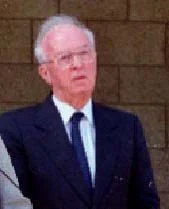
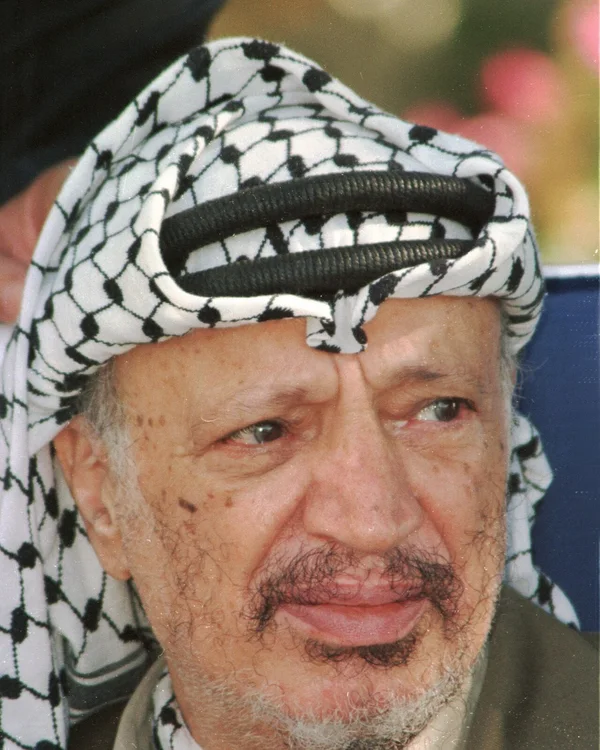
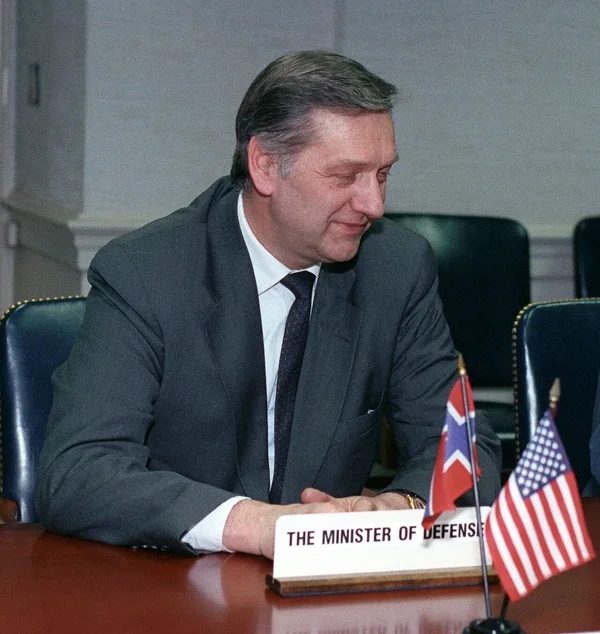
The people

Mediators and international partners

What was agreed

  1. Arafat to Rabin: the PLO recognises the right of the State of Israel to exist in peace and security, accepts Resolutions 242 and 338, and commits itself to resolving the conflict through negotiation.⁠1
  2. The PLO renounces terrorism and other acts of violence, and undertakes to enforce this on its members.⁠1
  3. The articles of the Palestinian Covenant denying Israel's right to exist are no longer valid, and the PLO will submit the change to the Palestinian National Council for approval.⁠1
  4. Rabin to Arafat: in light of the PLO commitments, the Government of Israel has decided to recognise the PLO as the representative of the Palestinian people and to begin negotiations with it.⁠1
  5. Arafat to Norwegian Foreign Minister Johan Jørgen Holst: the PLO will call on Palestinians in the West Bank and Gaza to reject violence and terrorism and to take part in economic rebuilding.⁠1

The geography

100%
Schematic map of Israel and its neighbours with line typesWest BankGaza StripJerusalemTel AvivGazaRamallahAmmanRafahNaharayim / Baqura
How to use the map

Choose a country on the map or in the list. One finger scrolls the page; two fingers move and pinch the map. You can also use + and −. For one-finger map dragging, enable the button above. Keyboard: arrows to pan, + and − to zoom, Home to reset.

Layers

Classification follows the original research as of 7 Oct 2026. This schematic map is not a legal boundary map or a live update.

  • International boundary agreed in a peace treaty
  • Treaty line with Jordan, “without prejudice to the status” of the territory beyond it
  • 1949 armistice line (“Green Line”) — not an agreed final border
  • “Blue Line” — UN line of withdrawal (2000), not a border
  • Ceasefire / disengagement line with Syria (1974)
  • Other international boundary
  • West Bank and Gaza Strip: permanent status not agreed
  • Golan Heights: held by Israel since 1967; annexation not recognised by the UN
  • UN area of separation (UNDOF); Israeli army positions inside it since December 2024

Schematic map. Lines are approximate and are not a legal determination. Data: Natural Earth (public domain), 1:10m scale; line classification and place names by this site. Lines as of October 2026. Peace map

The hard decisions

  • It was a hard step for both sides. In Israel, recognising an organisation that Israel had long regarded as a terrorist organisation met fierce opposition; Likud and other opposition parties opposed the Declaration of Principles that followed.⁠9 On the Palestinian side, critics saw recognising Israel as a large concession made before borders, Jerusalem and refugees were decided; Edward Said called the accords “an instrument of Palestinian surrender”.⁠10 The disputes are set out on the Declaration of Principles page.

What was carried out 2

  • The letters were exchanged, and on 13 September 1993 the Declaration of Principles was signed between the Government of Israel and the PLO.⁠2
  • The Wye River Memorandum of 1998 records a reaffirmation of the annulment of the Palestinian Covenant articles.⁠11

What was not 0

—

What changed in real life

  • According to the Norwegian government, Foreign Minister Holst learnt of the secret channel in April 1993 and went on to become the main go-between for the mutual recognition.⁠7

What remains open

  • The letters opened negotiations; they did not end a conflict. They set no border, decide nothing on Jerusalem or the refugees, and do not deal with a Palestinian state.⁠1

Photos, videos and quotes

To watch 2

The Israeli government's doubts before Oslo: archive records

Event date: · i24NEWS English

The decision was not easy in Jerusalem either: the records show the agreement was weighed and argued over inside the government itself.

The Washington signing on French television

Event date: · INA Histoire

In letters dated 9 September 1993, the PLO recognised Israel’s right to exist in peace and security, and Israel’s government recognised the PLO as the representative of the Palestinian people. The signing ceremony followed four days later.

Sources

Open the sources, compare and check for yourself.

What can this source tell us?

A document shows what was written; testimony tells what someone saw or remembers; research and reporting add interpretation and comparison. Always ask who produced the information and what still needs checking. The label alone does not establish quality, and two sites copying one document still give you one source.

Practise checking sources
Show all sources (12)Hide the sources

Cited on this page

  1. Israel–PLO Mutual Recognition, Letters and SpeechesPrimary United Nations Peacemaker9 September 1993
  2. Declaration of Principles on Interim Self-Government Arrangements ('Oslo Accords')Primary PA-X Peace Agreements Database, University of Edinburgh13 September 1993
  3. The Middle East, including the Palestinian Question — October 2026 Monthly ForecastResearch Security Council Report1 October 2026
  4. Rashid Khalidi, The Resolutions of the 19th Palestine National CouncilResearch Journal of Palestine Studies (text hosted by the Interactive Encyclopedia of the Palestine Question, palquest.org)
  5. Proposals and initiatives on the Question of Palestine (November 1988–September 1989)Reference United Nations, Division for Palestinian Rights30 October 1989
  6. The Madrid Conference, 1991Official archive U.S. Department of State, Office of the Historian
  7. Norway's involvement in the peace process in the Middle EastOfficial archive Government of Norway (regjeringen.no)
  8. The Road to Oslo: List of Documents, Files and BibliographyOfficial archive Israel State Archives
  9. The Road to Oslo, Chapter 1. From declaration to reality: September 1993–January 1994Official archive Israel State Archives
  10. Edward Said, The Morning AfterPress London Review of Books, 21 October 1993, as republished by the Institute for Palestine Studies21 October 1993
  11. Middle East peace process documents, 1998⁠–⁠1999 (Wye River and Sharm el-Sheikh memoranda)Primary United Nations, Division for Palestinian Rights (UNISPAL)

Further reading