Room for Peace

Nobel Peace Prize laureates

A Nobel Peace Prize marks a moment of hope, not the end of a conflict. Behind these laureates are mediation, risky decisions and disputes that did not disappear at the ceremony.

16 min read

What is the prize for?

Alfred Nobel left the prize to whoever had done the most for fraternity between nations, for cutting armies and for peace congresses.⁠1 Five people appointed by Norway's parliament choose the laureates.⁠2 The prize is handed over in Oslo on 10 December; all the other Nobel Prizes are presented in Stockholm.⁠3

Some laureates here stopped wars between states; others fought for human rights in their own country. Each card says which. Short official motivations are quoted in English as they appear on the Nobel Prize website; the Hebrew and Arabic pages add a translation.

Laureates connected to peace between Israel and its neighbours

1950

Ralph Bunche

1950 · United States · Acting United Nations Mediator

Year
1950
Shared with
Sole laureate
Role at the time
Acting UN Mediator in 1948⁠4
Official motivation
“for his work as mediator in Palestine in 1948⁠–⁠1949”⁠4
Born – died
7 August 1904, Detroit – 9 December 1971, New York⁠4
What happened next
He stayed at the UN, rising to under-secretary-general.⁠5

On 17 September 1948 Jewish extremists assassinated the UN mediator, the Swedish count Folke Bernadotte, and his chief aide, Ralph Bunche, suddenly found himself in charge.⁠45 After 11 months of almost non-stop talks, Israel and the Arab states signed the 1949 Armistice Agreements.⁠5 According to the presentation speech, he had to talk to each side separately, because the Arab delegates refused to sit at one table with the Jewish delegates.⁠6

Read on

Bunche was the first African American to win the Nobel Peace Prize.⁠4 The Nobel Prize website is precise about what he achieved: a ceasefire between the armies, not peace.⁠4 Two of his armistice agreements were later followed by full peace treaties, with Egypt in 1979⁠7 and with Jordan in 1994.⁠8 But the treaty borders are the Mandate-era boundaries, not the armistice lines: the Green Line in the West Bank remains an armistice line.⁠8

1978

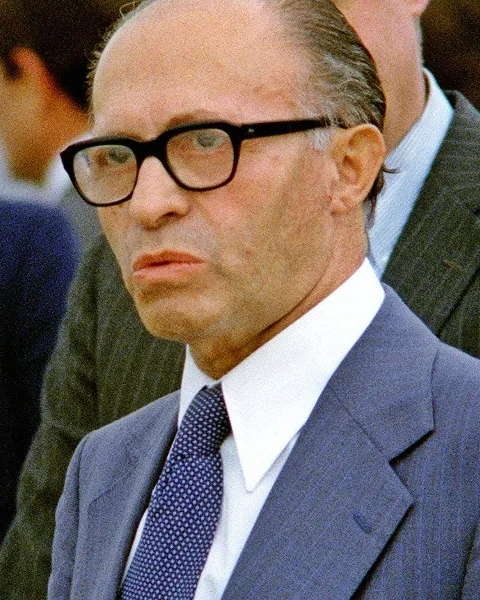
Menachem Begin

1978 · Israel · Prime Minister

Year
1978
Shared with
Anwar Sadat – half the prize each⁠12
Role at the time
Prime Minister of Israel⁠12
Official motivation
“for jointly having negotiated peace between Egypt and Israel in 1978”⁠12
Born – died
16 August 1913, Brest-Litovsk (then Russian Empire, now Belarus) – 9 March 1992, Tel Aviv⁠12
What happened next
The peace treaty with Egypt was signed on 26 March 1979.⁠7 On 28 August 1983 Begin announced his resignation and withdrew from public life.⁠14

In September 1978 Begin and Egypt's president, Anwar Sadat, spent 13 days at Camp David with President Jimmy Carter mediating, and came out with the Camp David Accords.⁠7 That is what the prize was for, before any treaty existed: in Oslo Begin spoke of a draft that would be a good treaty once signed and ratified.⁠9 The peace treaty was signed on 26 March 1979,⁠7 and Sinai returned to Egypt in 1982,⁠10 except Taba, returned in 1989 after arbitration.⁠11

Read on

The choice drew protest. The Nobel Prize website recalls that Begin had led the Irgun, which it says used terror against the British and Palestinian Arabs, and that protests moved the ceremony to Akershus Fortress.⁠12 The second Camp David framework, on Palestinian self-government, led nowhere: Palestinian representatives refused to take part, and Egypt and Israel never bridged their own differences.⁠7 As of October 2026 the peace treaty with Egypt is in force, but relations are strained.⁠13

1978

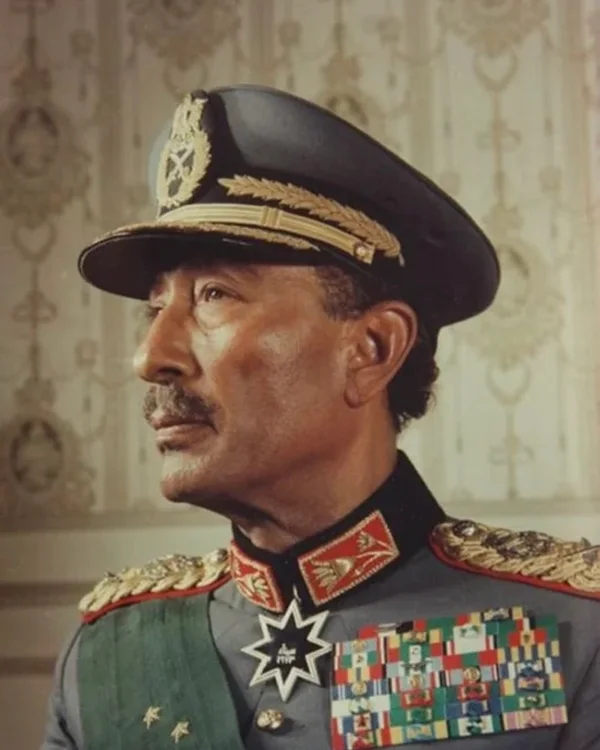
Anwar Sadat

1978 · Egypt · President

Year
1978
Shared with
Menachem Begin – half the prize each⁠15
Role at the time
President of the Arab Republic of Egypt⁠15
Official motivation
“for jointly having negotiated peace between Egypt and Israel in 1978”⁠15
Born – died
25 December 1918, Mit Abu al-Kawm, Egypt – 6 October 1981, Cairo⁠15
What happened next
He signed the peace treaty on 26 March 1979.⁠7 That same year the Arab League suspended Egypt's membership.⁠20 On 6 October 1981 he was assassinated.⁠15

According to the Nobel Prize website, the initiative was Sadat's. He broke with the Soviet Union, turned to the United States, and in the autumn of 1977 made a bold journey to Jerusalem. The Nobel site describes this as offering Begin peace in return for Sinai;⁠15 Sadat himself told the Knesset he had not come for a separate agreement, and demanded withdrawal from all territory occupied in 1967, including Arab Jerusalem, and rights for the Palestinian people.⁠16 The Camp David Accords followed, with Carter mediating.⁠15 He did not come to Oslo: his Nobel lecture was read by Sayed Marei, a former speaker of Egypt's parliament.⁠1718

Read on

In the Arab world, the Nobel Prize website notes, many saw his steps as a betrayal of Palestinian interests.⁠19 In 1979, the Arab League suspended Egypt and decided to move its headquarters from Cairo to Tunis.⁠20 On 6 October 1981 Sadat was assassinated in Cairo; according to the same site, his killers opposed reconciliation with Israel and his ties with the United States.⁠15 His treaty outlived him, and as of October 2026 it is still in force.⁠13

1994

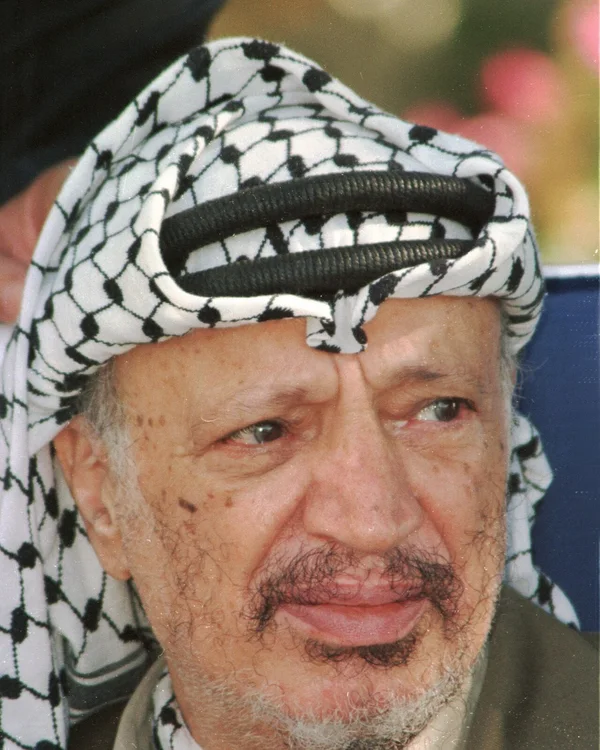
Yasser Arafat

1994 · Palestinians · Chairman of the PLO

Year
1994
Shared with
Shimon Peres and Yitzhak Rabin – one third each⁠21
Role at the time
Chairman of the Executive Committee of the PLO; President of the Palestinian Authority (PA)⁠21
Official motivation
“for their efforts to create peace in the Middle East”⁠21
Born – died
24 August 1929, Cairo – 11 November 2004, Paris⁠21
What happened next
In elections held in early 1996 he was elected President of the Palestinian Authority.⁠22 The Camp David Summit, 2000 ended without an agreement.⁠28

In 1974 Arafat spoke at the UN General Assembly of an olive branch in one hand and a freedom fighter's gun in the other.⁠21 In 1988 the PLO renounced terrorism and accepted the right of all parties, Israel included, to live in peace and security.⁠22 In 1993 the Declaration of Principles was signed by Mahmoud Abbas and Shimon Peres.⁠23 The Nobel Committee wrote that the step had taken great courage on both sides.⁠24

Read on

It was one of the most disputed choices. Committee member Kåre Kristiansen resigned about an hour after the announcement, saying, according to AFP, that Arafat's past was too tainted by violence, terrorism and bloodshed.⁠2526 The committee chair answered critics that honouring an effort for peace encourages it to continue.⁠27 The Declaration was an interim deal, and the permanent settlement never came: as of October 2026 there are no permanent-status talks, according to Security Council Report.⁠2829

1994

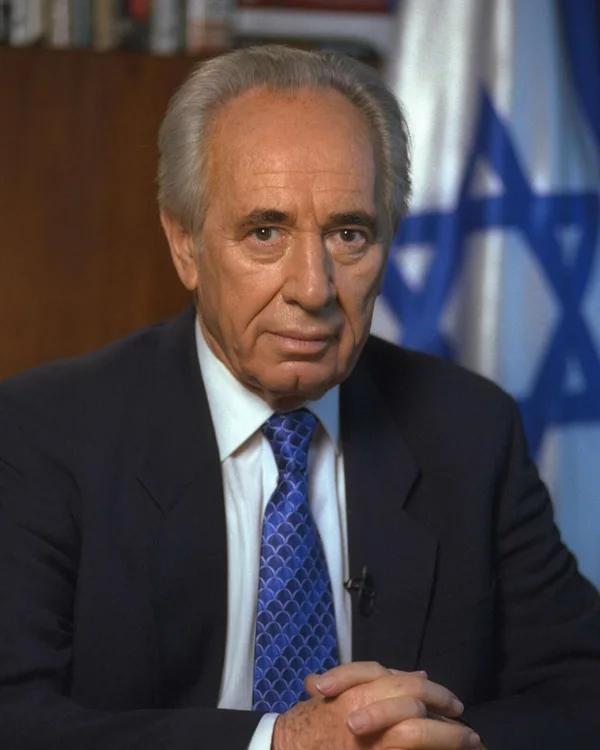
Shimon Peres

1994 · Israel · Foreign Minister

Year
1994
Shared with
Yasser Arafat and Yitzhak Rabin – one third each⁠31
Role at the time
Foreign Minister of Israel⁠31
Official motivation
“for their efforts to create peace in the Middle East”⁠31
Born – died
16 August 1923, Vishneva (then Poland, now Belarus) – 28 September 2016⁠31
What happened next
He became prime minister after Rabin's assassination and lost the election of May 1996.⁠33 That year he founded the Peres Center for Peace.⁠34 From 2007 to 2014 he was President of Israel.⁠35

In 1993 Israelis and Palestinians met in secret in Norway.⁠30 According to the Nobel Prize website, Peres, then foreign minister, led the Israeli side in the talks,⁠31 and on 13 September 1993 he signed the Declaration of Principles in Washington.⁠23 In his Nobel lecture he imagined a Middle East of free movement, education for all and a shared fight against poverty and disease.⁠32

Read on

The Nobel Prize website itself notes that Peres founded Israel's nuclear programme and is regarded as the architect of its nuclear weapons.⁠31 According to AFP, several committee members later regretted his prize, because of his role in the government during Israel's 2002 offensive in the West Bank.⁠26 His vision did not come true: the interim agreements never became a permanent settlement,⁠28 and he lost an election half a year after Rabin's assassination.⁠33

1994

Yitzhak Rabin

1994 · Israel · Prime Minister

Year
1994
Shared with
Yasser Arafat and Shimon Peres – one third each⁠36
Role at the time
Prime Minister of Israel⁠36
Official motivation
“for their efforts to create peace in the Middle East”⁠36
Born – died
1 March 1922, Jerusalem – 4 November 1995, Tel Aviv⁠36
What happened next
On 26 October 1994, 12 days after the prize was announced, he signed the peace treaty with Jordan.⁠824 On 4 November 1995 he was assassinated at the end of a peace rally in Tel Aviv.⁠33

Rabin spent most of his life as a soldier, rising to chief of staff.⁠36 Elected prime minister in 1992, he backed the deal worked out in secret in Norway, the Declaration of Principles.⁠36 In Oslo he spoke as a commander: of sending young people into battle knowing that some will not come back.⁠37

Read on

The prize came on a terrible day. According to AFP, that same day Rabin was dealing with the Hamas kidnapping of an Israeli soldier; an officer was killed in the rescue attempt, and the hostage was found dead. Rabin later said he would rather have had the two Israelis alive than the prize.⁠26 12 days after the announcement he signed the peace treaty with Jordan.⁠824 On 4 November 1995, at the end of a peace rally in Tel Aviv, Yigal Amir, a right-wing law student who opposed the Oslo process, shot and killed him.⁠33

2002

Jimmy Carter

2002 · United States · former President

Year
2002
Shared with
Sole laureate
Role at the time
Former (39th) President of the United States⁠42
Official motivation
In brief, not a quotation: for decades of untiring effort to find peaceful solutions to international conflicts, to advance democracy and human rights, and to promote economic and social development.⁠42 The committee's announcement explicitly mentions his mediation of the Camp David Accords.⁠39
Born – died
1 October 1924, Plains, Georgia – 29 December 2024, Plains⁠42
What happened next
He kept working through the Carter Center, which has worked since 1982 on conflict resolution, election observation and fighting disease.⁠4339

Carter received the prize 24 years after Camp David. He had mediated at Camp David, yet in 1978 the prize went to Begin and Sadat alone. The reason was paperwork: nobody had nominated him by the 1 February deadline, and the rules did not let the committee add him later.⁠38 The committee chair in 2002, Gunnar Berge, called it one of the great omissions in the history of the prize.⁠38

Read on

By 2002, the record the committee honoured had grown far beyond Camp David. Its announcement credited the Carter Center's mediation across several continents, election observation and work against tropical diseases.⁠39 The presentation speech described a concrete democratic intervention: in Nicaragua in 1990, Carter persuaded President Daniel Ortega to accept his election defeat. It also noted that, within hours of learning he had won the Nobel Prize, Carter was leaving for another election-observation assignment, in Jamaica.⁠38

This prize caused a row too, this time over Iraq: Berge said the choice should also be read as criticism of US policy on Iraq, and committee member Hanna Kvanmo said that was his personal view.⁠40 In his lecture, Carter argued for Resolution 242 as the basis for peace, linking withdrawal from occupied territory with Israelis' security alongside their neighbours.⁠41

Other laureates from the region and for the region

1957

Lester Pearson

1957 · Canada · former foreign minister

Year
1957
Shared with
Sole laureate
Role at the time
Former Canadian Secretary of State for External Affairs; former President of the UN General Assembly⁠46
Motivation in brief
For his crucial contribution to deploying a UN Emergency Force after the Suez Crisis⁠46
Born or founded
23 April 1897, Toronto – 27 December 1972, Ottawa⁠46
Kind of work
Ending a war between states, through the UN

In 1956 war broke out over the Suez Canal: Israel entered Sinai, and Britain and France attacked Egypt after issuing an ultimatum. Their vetoes blocked the Security Council.⁠44 Pearson went to the General Assembly and proposed an international force to secure and supervise the end of the fighting.⁠44 On 4 November the Assembly requested a plan within 48 hours. Hammarskjöld and his staff organised the force, drawing its contingents from countries outside the Council's five permanent members.⁠45

Read on

The force supervised foreign troops' withdrawal and then separated Egyptian and Israeli forces. Its presence depended on Egypt's consent, which Egypt withdrew in May 1967.⁠45 Pearson's prize recognised the diplomacy behind this new way of supervising a ceasefire: an international presence between armies that had just been fighting. He later became Canada's prime minister.⁠46

1961

Dag Hammarskjöld

1961 · Sweden · UN Secretary-General

Year
1961
Shared with
Sole laureate
Role at the time
Secretary-General of the United Nations⁠47
Motivation in brief
For developing the UN into an effective and constructive international organisation, able to give life to the principles of its Charter⁠47
Born or founded
29 July 1905, Jönköping, Sweden – 18 September 1961, Ndola (then Northern Rhodesia, now Zambia)⁠47
Kind of work
Strengthening the UN; peacekeeping

The committee praised Hammarskjöld for building an efficient, independent UN Secretariat, and for organising a peacekeeping force in the Middle East after the Suez Crisis.⁠47 He died in September 1961 and received the prize that year, the only person ever awarded the Nobel Peace Prize after death.⁠48

1988

United Nations Peacekeeping Forces

1988 · United Nations · troops from many countries

Year
1988
Shared with
Sole laureate
Role at the time
Peacekeeping in countries experiencing military conflict⁠49
Motivation in brief
“for preventing armed clashes and creating conditions for negotiations”⁠49
Born or founded
The Nobel Prize website dates the forces to 1948⁠49
Kind of work
Peacekeeping between warring parties

A prize for an organisation, not a person. Between 1948 and 1988 more than 500,000 people from 53 countries served in UN peacekeeping forces, and 733 of them were killed.⁠49 Their job: to report, hold buffer zones, supervise armistices and help civilians, the Middle East included.⁠49 Not a prize for a peace treaty, but for keeping things quiet until there is one.

2003

Shirin Ebadi

2003 · Iran · lawyer

Year
2003
Shared with
Sole laureate
Role at the time
Lawyer⁠50
Motivation in brief
For her efforts for democracy and human rights, especially the rights of women and children⁠50
Born or founded
21 June 1947, Hamadan, Iran⁠50
Kind of work
Human rights and democracy – not peace between states

Ebadi was one of Iran's first women judges, and lost her post after the 1979 revolution. She became a lawyer for the persecuted, and in 2000 she was jailed for criticising the country's religious rule.⁠50 According to the Nobel Prize website, the committee also hoped this choice would ease tension between the Muslim world and the West after 11 September 2001.⁠50

2005

Mohamed ElBaradei and the International Atomic Energy Agency (IAEA)

2005 · Egypt and the UN system · the IAEA's Director General and the agency itself

Year
2005
Shared with
ElBaradei and the IAEA shared the prize – half each⁠5152
Role at the time
Director General of the IAEA⁠51
Motivation in brief
For their efforts to prevent nuclear energy being used for military purposes and to ensure its peaceful use is as safe as possible⁠51
Born or founded
ElBaradei: 17 June 1942, Cairo.⁠51 IAEA: founded 1957, Vienna⁠52
Kind of work
Preventing the spread of nuclear weapons

ElBaradei, an Egyptian lawyer and diplomat, led the IAEA, the agency whose inspectors check that nuclear energy serves peace and not weapons.⁠5152 According to the Nobel Prize website, before the 2003 war the agency rejected claims of a nuclear programme in Iraq, and was later shown to be right.⁠52 A prize for international oversight, not for an agreement between states.

2011

Tawakkol Karman

2011 · Yemen · journalist

Year
2011
Shared with
Ellen Johnson Sirleaf and Leymah Gbowee, both of Liberia – one third each⁠53
Role at the time
Yemeni journalist⁠53
Motivation in brief
For their non-violent struggle for the safety of women and their right to take full part in peace-building⁠53
Born or founded
7 February 1979, Ta'izz, Yemen⁠53
Kind of work
Women's rights and non-violent struggle for democracy

Karman is the first Arab woman to win the Nobel Peace Prize.⁠53 As a journalist she founded Women Journalists Without Chains, demanded democracy and press freedom in Yemen, and was detained and harassed for it.⁠53 In 2011 she was one of the leading voices of the Arab Spring, and she also worked for reconciliation between religious communities.⁠53

2015

The Tunisian National Dialogue Quartet

2015 · Tunisia · four civil-society organisations

Year
2015
Shared with
Sole laureate, as one body
Role at the time
Four organisations: the General Labour Union, the Confederation of Industry, Trade and Handicrafts, the Human Rights League and the Order of Lawyers⁠55
Motivation in brief
For its decisive contribution to building a pluralistic democracy in Tunisia after the 2011 revolution⁠55
Born or founded
Summer 2013⁠54
Kind of work
Democracy and national dialogue – peace inside one country

The Quartet formed in summer 2013, when political assassinations and widespread unrest threatened Tunisia's transition after the 2011 revolution.⁠54 Workers' and employers' organisations joined human-rights defenders and lawyers to bring political rivals into dialogue. The talks helped Tunisia reach a new constitution and elections; the Nobel account highlights cooperation between Islamist and secular movements.⁠55 The committee's 2015 announcement credited the Quartet with supporting the constituent assembly and building wider acceptance of the constitutional process ahead of the 2014 elections. It awarded the four organisations collectively for that mediation.⁠54 Their shared work brought organised voices from outside party politics into the effort to keep political competition peaceful.

2018

Nadia Murad

2018 · Iraq · Yazidi human rights activist

Year
2018
Shared with
Denis Mukwege, a doctor from the Congo – half each⁠56
Role at the time
Campaigner for victims of sexual violence and human trafficking⁠56
Motivation in brief
For their efforts to end the use of sexual violence as a weapon of war and armed conflict⁠56
Born or founded
1993, Kojo, Iraq⁠56
Kind of work
Human rights: fighting sexual violence in war

Murad belongs to Iraq's Yazidi minority. In 2014, Islamic State fighters attacked her village, murdered hundreds of men and abducted young women. She was held captive for three months, suffered severe sexual violence, and escaped.⁠56 Since then she has spoken for the victims, and in Oslo she said that only justice and the prosecution of the criminals can restore their dignity.⁠57

2023

Narges Mohammadi

2023 · Iran · imprisoned human rights advocate

Year
2023
Shared with
Sole laureate
Role at the time
Human rights advocate, in prison when the prize was announced⁠58
Motivation in brief
For her fight against the oppression of women in Iran and to promote human rights and freedom for all⁠58
Born or founded
21 April 1972, Zanjan, Iran⁠58
Kind of work
Human rights and women's rights – not peace between states

Mohammadi fights the oppression of women in Iran, and pays a heavy price for it. She worked at the human rights centre founded by Shirin Ebadi, the 2003 laureate.⁠58 According to the Nobel Prize website, she has been arrested 13 times and sentenced to a total of 31 years in prison and 154 lashes, and she was in Evin prison in Tehran when the prize was announced.⁠58 Her 17-year-old twins, Kiana and Ali, accepted it in Oslo and read the lecture she had written.⁠59

Every laureate on this page at a glance

YearLaureate(s)For whatOn this site
1950Ralph BuncheMediating the 1949 armistice agreementsThe 1949 Armistice Agreements · Bunche
1957Lester PearsonThe UN Emergency Force in the Suez Crisis—
1961Dag HammarskjöldStrengthening the UN; awarded posthumously—
1978Anwar Sadat and Menachem BeginNegotiating peace between Egypt and IsraelThe Camp David Accords · Sadat · Begin
1988UN Peacekeeping ForcesPreventing clashes and creating conditions for negotiation—
1994Yasser Arafat, Shimon Peres and Yitzhak RabinThe Oslo AccordsDeclaration of Principles (Oslo I) · Arafat · Peres · Rabin
2002Jimmy CarterDecades of conflict resolution, including Camp DavidThe Camp David Accords · Carter
2003Shirin EbadiDemocracy and human rights in Iran—
2005Mohamed ElBaradei and the IAEAPreventing military use of nuclear energy—
2011Tawakkol Karman (with Ellen Johnson Sirleaf and Leymah Gbowee)Non-violent struggle for women's rights—
2015Tunisian National Dialogue QuartetBuilding a pluralistic democracy in Tunisia—
2018Nadia Murad (with Denis Mukwege)Fighting sexual violence as a weapon of war—
2023Narges MohammadiFighting the oppression of women in Iran—

And who was left out?

An agreement is the work of many, and a prize can go to three people at most.⁠3 So in 1994 there was no prize for Mahmoud Abbas, who signed the Declaration of Principles for the PLO,⁠23 nor for the people of the secret channel: Abu Ala, Hassan Asfour, Yair Hirschfeld, Ron Pundak, Uri Savir and Joel Singer, with their Norwegian hosts Mona Juul, Terje Rød-Larsen and Foreign Minister Johan Jørgen Holst.⁠30

King Hussein was not among the 1994 laureates either, although the peace treaty with Jordan was signed 12 days after the announcement.⁠248 We found no official explanation, and nomination files stay sealed for 50 years.⁠2 In one case the committee did explain: Jimmy Carter missed the 1978 prize because of a deadline, and received it 24 years later.⁠3848

Sources

Open the sources, compare and check for yourself.

What can this source tell us?

A document shows what was written; testimony tells what someone saw or remembers; research and reporting add interpretation and comparison. Always ask who produced the information and what still needs checking. The label alone does not establish quality, and two sites copying one document still give you one source.

Practise checking sources
Show all sources (63)Hide the sources

Cited on this page

  1. The Nobel Peace Prize (overview page)Primary The Nobel Prize (Nobel Foundation)
  2. Nomination and selection of Nobel Peace Prize laureatesPrimary The Nobel Prize (Nobel Foundation)
  3. Facts on the Nobel Peace PrizePrimary The Nobel Prize (Nobel Foundation)
  4. Ralph Bunche – FactsPrimary The Nobel Prize (Nobel Foundation)
  5. Ralph Bunche – BiographicalReference The Nobel Prize (Nobel Foundation)
  6. Nobel Peace Prize 1950 – Award ceremony speech (Gunnar Jahn)Primary The Nobel Prize (Nobel Foundation)10 December 1950
  7. Camp David Accords and the Arab-Israeli Peace ProcessOfficial archive U.S. Department of State, Office of the Historian
  8. Treaty of Peace between the State of Israel and the Hashemite Kingdom of Jordan, 26 October 1994Primary United Nations (UNISPAL)26 October 1994
  9. Menachem Begin – Nobel LecturePrimary The Nobel Prize (Nobel Foundation)10 December 1978
  10. The Mission BeginsOfficial archive Multinational Force and Observers (MFO)
  11. Report on the handover of Taba to Egypt, 16 March 1989Press The Christian Science Monitor16 March 1989
  12. Menachem Begin – FactsPrimary The Nobel Prize (Nobel Foundation)
  13. Gas and Peace: Can Energy Trade Contain Egypt–Israel Conflict?Research Carnegie Endowment for International Peace (Sada)31 August 2026
  14. Menachem Begin – timelineResearch Menachem Begin Heritage Center
  15. Anwar al-Sadat – FactsPrimary The Nobel Prize (Nobel Foundation)
  16. President Anwar Sadat's Address to the Israeli Knesset, 20 November 1977Primary ibiblio (mirror of the speech text)20 November 1977
  17. Begin Receives Nobel Peace PrizePress Jewish Telegraphic Agency (JTA)11 December 1978
  18. Anwar al-Sadat – Nobel Lecture (read by Sayed Marei)Primary The Nobel Prize (Nobel Foundation)10 December 1978
  19. Anwar al-Sadat – Speed readReference The Nobel Prize (Nobel Foundation)
  20. A/34/160–S/13216: Arab League Council resolutions of 31 March 1979, annex §§2–3Primary United Nations — letter transmitting Arab League Council resolutions3 April 1979
  21. Yasser Arafat – FactsPrimary The Nobel Prize (Nobel Foundation)
  22. Yasser Arafat – BiographicalReference The Nobel Prize (Nobel Foundation)
  23. Declaration of Principles on Interim Self-Government Arrangements ('Oslo Accords')Primary PA-X Peace Agreements Database, University of Edinburgh13 September 1993
  24. Nobel Peace Prize 1994 – Press releasePrimary The Nobel Prize (Nobel Foundation)14 October 1994
  25. Kåre Kristiansen – short biography (members of the Norwegian Nobel Committee)Reference The Nobel Prize (Nobel Foundation)
  26. Thirty years on, Nobel Peace Prize hopes for Mideast shattered by decades of conflictPress AFP (published by Malay Mail)4 October 2024
  27. Nobel Peace Prize 1994 – Award ceremony speech (Francis Sejersted)Primary The Nobel Prize (Nobel Foundation)10 December 1994
  28. The Oslo Accords and the Arab-Israeli Peace ProcessOfficial archive U.S. Department of State, Office of the Historian
  29. The Middle East, including the Palestinian Question – October 2026 Monthly ForecastResearch Security Council Report1 October 2026
  30. Norway's involvement in the peace process in the Middle EastOfficial archive Government of Norway (regjeringen.no)
  31. Shimon Peres – FactsPrimary The Nobel Prize (Nobel Foundation)
  32. Shimon Peres – Nobel LecturePrimary The Nobel Prize (Nobel Foundation)
  33. Assassination of Israeli PM Rabin (1995)Research Economic Cooperation Foundation (ECF)
  34. Peres Center for Peace & Innovation (home page)Research Peres Center for Peace and Innovation
  35. Shimon PeresReference Encyclopaedia Britannica
  36. Yitzhak Rabin – FactsPrimary The Nobel Prize (Nobel Foundation)
  37. Yitzhak Rabin – Nobel LecturePrimary The Nobel Prize (Nobel Foundation)
  38. Nobel Peace Prize 2002 – Award ceremony speech (Gunnar Berge)Primary The Nobel Prize (Nobel Foundation)10 December 2002
  39. Nobel Peace Prize 2002 – Press releasePrimary The Nobel Prize (Nobel Foundation)11 October 2002
  40. Carter wins Nobel Peace Prize (report on the announcement and the committee chairman's remarks)Press CNN11 October 2002
  41. Jimmy Carter – Nobel LecturePrimary The Nobel Prize (Nobel Foundation)10 December 2002
  42. Jimmy Carter – FactsPrimary The Nobel Prize (Nobel Foundation)
  43. About The Carter Center – historyResearch The Carter Center
  44. Nobel Peace Prize 1957 – Award ceremony speech (Gunnar Jahn)Primary The Nobel Prize (Nobel Foundation)10 December 1957
  45. First United Nations Emergency Force (UNEF I) — Background (full text)Official archive United Nations Peacekeeping
  46. Lester Bowles Pearson – FactsPrimary The Nobel Prize (Nobel Foundation)
  47. Dag Hammarskjöld – FactsPrimary The Nobel Prize (Nobel Foundation)
  48. Geir Lundestad, The Nobel Peace Prize, 1901⁠–⁠2000Research The Nobel Prize (Nobel Foundation)15 March 2001
  49. United Nations Peacekeeping Forces – FactsPrimary The Nobel Prize (Nobel Foundation)
  50. Shirin Ebadi – FactsPrimary The Nobel Prize (Nobel Foundation)
  51. Mohamed ElBaradei – FactsPrimary The Nobel Prize (Nobel Foundation)
  52. International Atomic Energy Agency (IAEA) – FactsPrimary The Nobel Prize (Nobel Foundation)
  53. Tawakkol Karman – FactsPrimary The Nobel Prize (Nobel Foundation)
  54. Nobel Peace Prize 2015 — Press releasePrimary The Nobel Prize (Nobel Foundation)2015
  55. National Dialogue Quartet – FactsPrimary The Nobel Prize (Nobel Foundation)
  56. Nadia Murad – FactsPrimary The Nobel Prize (Nobel Foundation)
  57. Nadia Murad – Nobel LecturePrimary The Nobel Prize (Nobel Foundation)10 December 2018
  58. Narges Mohammadi – FactsPrimary The Nobel Prize (Nobel Foundation)
  59. Nobel Peace Prize 2023 – Award ceremony speech (Berit Reiss-Andersen)Primary The Nobel Prize (Nobel Foundation)10 December 2023

Further reading