Room for Peace

Israel and the PalestiniansMadrid, Spain

The Madrid Conference

Visit or conferenceHistorical event

An opening conference for negotiations, not an agreement: no binding document was signed. It set the framework for the talks that followed.

In one sentence

To seat all the parties to the Arab–Israeli conflict around one table for the first time, for direct talks.

In 30 seconds

At the end of October 1991, Israel, its neighbours and Palestinian representatives sat around one table in Madrid for the first time, under American and Soviet sponsorship.⁠1 No agreement was signed, but channels opened from which the Oslo Accords and peace with Jordan later grew.⁠1

Where it stands today

A historical event that is over. According to the US State Department's Office of the Historian, the Washington talks it launched were stuck by 1993, and the parties went round them through secret channels.⁠1

Status checked on

The challenge

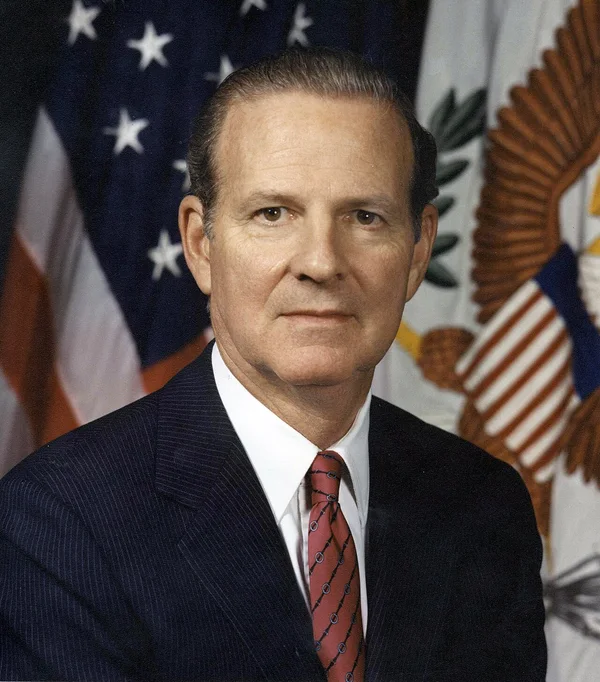
Until 1991 only Egypt had signed a peace with Israel. After the Gulf War, US Secretary of State James Baker made rounds of talks in the region to bring everyone to direct negotiations.⁠1

The hard question was who would represent the Palestinians. In the end delegates from the West Bank and Gaza came, inside a joint delegation with Jordan, without PLO officials and without residents of East Jerusalem.⁠1 Haidar Abdel-Shafi spoke for the Palestinians.⁠2

The road there

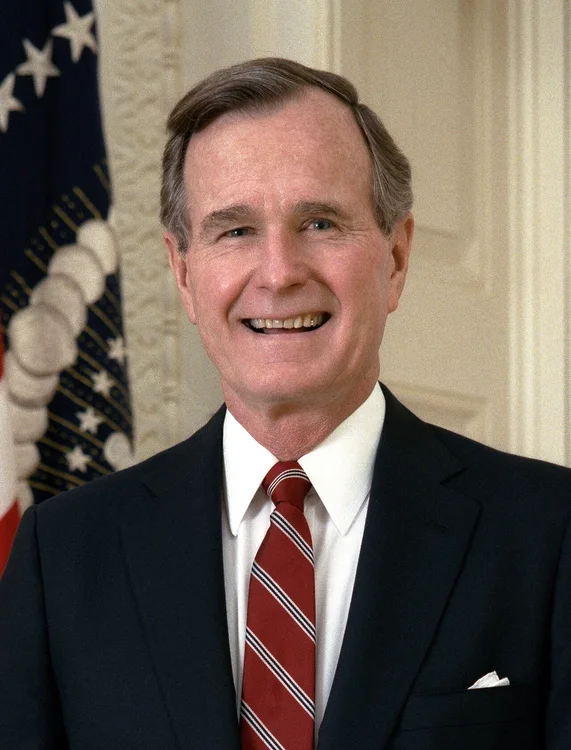
  1. The conference opens in Madrid, co-chaired by US President George H. W. Bush and Soviet President Mikhail Gorbachev.⁠1
  2. The opening speeches end, with direct talks due to start a few days later.⁠2 Speaking for the Arab states were their foreign ministers: Amr Moussa of Egypt, Farouk al-Sharaa of Syria, Fares Boueiz of Lebanon and Kamel Abu Jaber of Jordan.⁠2
  3. The first face-to-face bilateral talks open in Madrid, among them Israel with the joint Jordanian–Palestinian delegation.⁠3
  4. The bilateral talks move to Washington.⁠1
  5. Multilateral talks on regional issues begin in Moscow.⁠1

The people

Mediators and international partners

What came out of it

  1. No agreement was signed. Each side restated its positions, but all agreed to keep talking.⁠1
  2. A bilateral track: direct talks between Israel and each Arab delegation, in Washington.⁠1
  3. A multilateral track: regional talks that opened in Moscow.⁠1

The geography

100%
Schematic map of Israel and its neighbours with line typesMediterranean SeaGulf of AqabaGulf of SuezEGYPTSinaiISRAELJORDANSYRIALEBANONSAUDI ARABIAWest BankGaza StripGolan HeightsJerusalemTel AvivGazaRamallahAmmanCairoDamascusBeirutSharm el-SheikhEilat · Aqaba · TabaRafahNaharayim / BaquraSuez
How to use the map

Choose a country on the map or in the list. One finger scrolls the page; two fingers move and pinch the map. You can also use + and −. For one-finger map dragging, enable the button above. Keyboard: arrows to pan, + and − to zoom, Home to reset.

Layers

Classification follows the original research as of 7 Oct 2026. This schematic map is not a legal boundary map or a live update.

  • International boundary agreed in a peace treaty
  • Treaty line with Jordan, “without prejudice to the status” of the territory beyond it
  • 1949 armistice line (“Green Line”) — not an agreed final border
  • “Blue Line” — UN line of withdrawal (2000), not a border
  • Ceasefire / disengagement line with Syria (1974)
  • Other international boundary
  • West Bank and Gaza Strip: permanent status not agreed
  • Golan Heights: held by Israel since 1967; annexation not recognised by the UN
  • UN area of separation (UNDOF); Israeli army positions inside it since December 2024

Schematic map. Lines are approximate and are not a legal determination. Data: Natural Earth (public domain), 1:10m scale; line classification and place names by this site. Lines as of October 2026. Peace map

The hard decisions

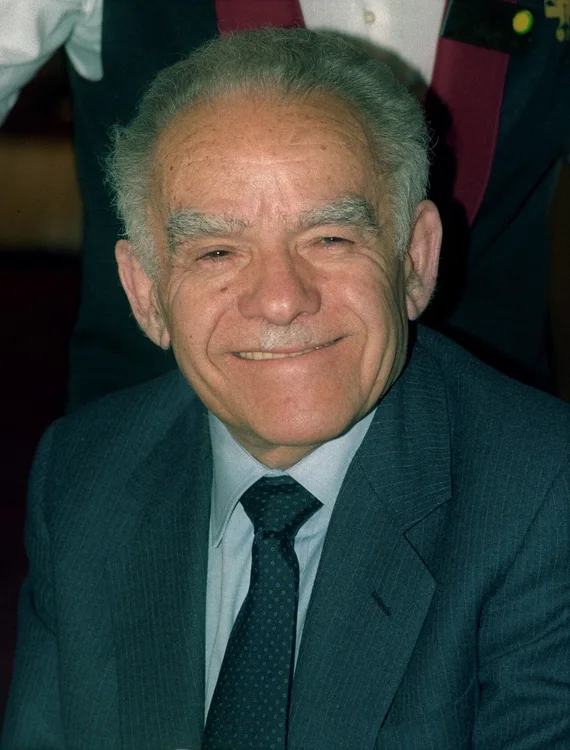
  • Prime Minister Yitzhak Shamir led the Israeli delegation. Israel did not sit opposite the PLO, and the Palestinians came without formal PLO representation.⁠1

What was carried out 1

  • The bilateral talks opened in Madrid on 3 November 1991 and continued in Washington from December; the multilateral talks opened in Moscow in January 1992.⁠31

What was not 1

  • The Washington talks produced no agreement and were stuck by 1993.⁠1

What changed in real life

  • For the first time, all the parties to the Arab–Israeli conflict sat together for direct talks.⁠1
  • A secret channel in Norway, opened in January 1993, led to the Declaration of Principles between Israel and the PLO.⁠45 Secret talks between Israel and Jordan led to the peace treaty of October 1994.⁠1

What remains open

  • Madrid shows that a big public stage can open a door, but the decisions were later made in small, secret rooms.⁠1
  • The Syrian and Lebanese tracks did not mature into peace treaties; see the talks with Syria.

Photos, videos and quotes

To watch 5

The Madrid conference: Israel State Archives

Event date: · ארכיון המדינה - ISRAEL STATE ARCHIVES

At Madrid, Israel, Syria, Lebanon and a joint Jordanian–Palestinian delegation sat together for the first time, under US and Soviet sponsorship.

Yitzhak Shamir's speech at Madrid

Event date: · Thalamus Syri

Shamir came to Madrid reluctantly and under US pressure, but simply sitting across from Arab and Palestinian delegates was a precedent.

President Bush's speech opening the Madrid conference

Event date: · Thalamus Syri

Bush and Gorbachev opened the conference together. Bush said peace had to be built through direct negotiation, not imposed from outside.

Madrid at 20: i24NEWS Arabic

Event date: · i24NEWS Arabic

Madrid was the first time Palestinian representatives formally faced Israel. The head of the delegation, Dr Haidar Abdel-Shafi, spoke there for the Palestinian people.

More from the archive (1)

Kissinger and Shamir on Face the Nation, November 1991

Event date: · Face the Nation

Madrid opened bilateral and multilateral channels that continued in Washington. Out of them, indirectly, came the Oslo Accords and peace with Jordan.

Sources

Open the sources, compare and check for yourself.

What can this source tell us?

A document shows what was written; testimony tells what someone saw or remembers; research and reporting add interpretation and comparison. Always ask who produced the information and what still needs checking. The label alone does not establish quality, and two sites copying one document still give you one source.

Practise checking sources
Show all sources (6)Hide the sources

Cited on this page

  1. The Madrid Conference, 1991Official archive U.S. Department of State, Office of the Historian
  2. Approaches towards the Settlement of the Arab-Israeli Conflict and the Question of Palestine, Issue 7, October 1991 (invitation to the Madrid Conference and statements made there)Primary United Nations, Division for Palestinian Rights (UNISPAL)October 1991
  3. Chronology entry, Sunday, November 3, 1991 (face-to-face bilateral talks begin in Madrid)Research Institute for Palestine Studies – Chronology3 November 1991
  4. Norway's involvement in the peace process in the Middle EastOfficial archive Government of Norway (regjeringen.no)
  5. Declaration of Principles on Interim Self-Government Arrangements ('Oslo Accords')Primary PA-X Peace Agreements Database, University of Edinburgh13 September 1993

Further reading