Room for Peace

RegionalRhodes; Ras en-Naqoura; Hill 232 near Mahanayim

The 1949 Armistice Agreements

Armistice / disengagement / ceasefirePartly implemented

Four armistice agreements that ended the fighting of the 1948 war – not peace treaties, with no mutual recognition and no agreed borders.

In one sentence

To stop the fighting and fix temporary military lines until a peace settlement could be reached.

In 30 seconds

In 1949 the guns of the first Arab–Israeli war fell silent. Between February and July, Israel signed four armistice (glossary) agreements with Egypt, Lebanon, Jordan and Syria, mediated by the UN. They drew military lines, one of them later called the Green Line, and said plainly that these were not borders. They were meant as a pause on the way to peace.

Where it stands today

As of October 2026: the agreements with Egypt and Jordan were replaced by peace treaties (glossary) (1979, 1994). No peace treaty has been signed with Syria or Lebanon: talks with Syria have not yet produced an agreement,⁠1 and with Lebanon only a framework was signed in June 2026, as a first step toward a future agreement.⁠2

Status checked on

The challenge

The 1948 war (the War of Independence for Israelis, the Nakba for Palestinians) ended with no political settlement. Israel wanted the fighting over and its existence secured. The Arab governments agreed only to military armistices: the texts say they were dictated by military considerations alone and do not prejudice any side's rights or claims.⁠3 The Palestinians were not a party to any of the four.

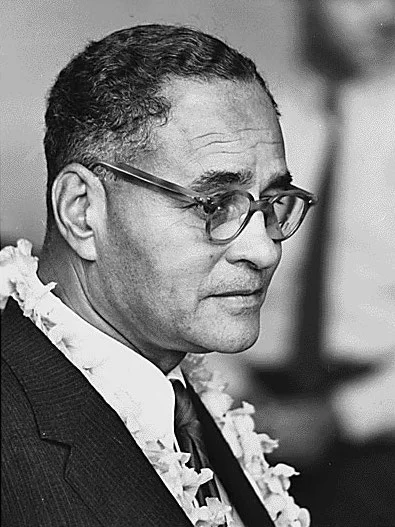
The UN Acting Mediator, Ralph Bunche, ran the talks. He took over after Jewish extremists assassinated the mediator, Count Folke Bernadotte, in autumn 1948.⁠4

The road there

  1. The agreement with Egypt is signed at Rhodes.⁠3 Walter Eytan, Yigael Yadin and Eliahu Sasson sign for Israel, and the officers Seif el-Dine and el-Rahmany for Egypt.⁠5
  2. The agreement with Lebanon is signed at Ras en-Naqoura.⁠6 Mordechai Makleff, Yehoshua Pelman and Shabtai Rosenne sign for Israel, and Toufic Salem and J. Harb for Lebanon.⁠7
  3. The agreement with Jordan is signed at Rhodes.⁠8 Reuven Shiloah and Moshe Dayan sign for Israel, and Ahmed Sudki el-Jundi and Mohamed Maayte for Jordan.⁠9
  4. Prime Minister David Ben-Gurion, whose government directed the talks, presents the first three agreements to the Knesset. He did not sign them himself; the delegations did.⁠1011
  5. At Lausanne, where the UN Conciliation Commission is holding talks with Israel and the Arab delegations, a protocol is adopted with a map attached; the Commission later calls the map a working document.⁠12
  6. The agreement with Syria is signed at Hill 232 near Mahanayim.⁠13 Makleff, Pelman and Rosenne sign for Israel, and Fawzi Selu, Mohamed Nasser and Afif al-Bizri for Syria.⁠1415
  7. Israel offers to take back 100,000 refugees as part of a general resettlement plan. The Commission finds the offer unsatisfactory, and on 15 August the Arab delegations reject it.⁠12
  8. Bunche receives the Nobel Peace Prize for his work as mediator.⁠4

The people

Mediators and international partners

What was agreed

  1. The fighting ends, and armistice lines separate the forces.⁠3
  2. The lines are not political borders. The agreement with Egypt says so outright; with Jordan they are agreed without prejudice to any future settlement or claims.⁠38
  3. The line with Lebanon follows the old international border between Lebanon and Mandatory Palestine.⁠6
  4. With Syria, demilitarised zones are set up, with no bearing on the final territorial settlement.⁠13
  5. Mixed Armistice Commissions chaired by the UN supervise the agreements, which stay in force until peace is reached.⁠3
  6. Iraq, whose army fought in the war, signed no armistice. Under the agreement with Jordan, Jordanian forces replaced the Iraqi forces in their sector, and Jordan took responsibility for all Iraqi forces in Palestine.⁠8

The geography

100%
Schematic map of Israel and its neighbours with line typesMediterranean SeaGulf of AqabaGulf of SuezEGYPTSinaiISRAELJORDANSYRIALEBANONSAUDI ARABIAWest BankGaza StripGolan HeightsJerusalemTel AvivGazaRamallahAmmanCairoDamascusBeirutSharm el-SheikhEilat · Aqaba · TabaRafahNaharayim / BaquraSuez
How to use the map

Choose a country on the map or in the list. One finger scrolls the page; two fingers move and pinch the map. You can also use + and −. For one-finger map dragging, enable the button above. Keyboard: arrows to pan, + and − to zoom, Home to reset.

Layers

Classification follows the original research as of 7 Oct 2026. This schematic map is not a legal boundary map or a live update.

  • International boundary agreed in a peace treaty
  • Treaty line with Jordan, “without prejudice to the status” of the territory beyond it
  • 1949 armistice line (“Green Line”) — not an agreed final border
  • “Blue Line” — UN line of withdrawal (2000), not a border
  • Ceasefire / disengagement line with Syria (1974)
  • Other international boundary
  • West Bank and Gaza Strip: permanent status not agreed
  • Golan Heights: held by Israel since 1967; annexation not recognised by the UN
  • UN area of separation (UNDOF); Israeli army positions inside it since December 2024

Schematic map. Lines are approximate and are not a legal determination. Data: Natural Earth (public domain), 1:10m scale; line classification and place names by this site. Lines as of October 2026. Peace map

The hard decisions

  • Each side accepted lines that did not match its aims. That is why the texts insist the lines are not final.⁠8
  • The Gaza Strip stayed under Egyptian control and the West Bank under Jordanian control;⁠16 no Palestinian state was established.

Where accounts differ

According to The Arab delegations at Lausanne, 1949 (as recorded by the UN Conciliation Commission)
Israel's offer contradicts Resolution 194 and the May protocol, and makes the refugees' fate depend on Israel's economic and strategic interests. They demanded the return of all refugees from the areas allotted to the Arabs or meant to be international, and compensation for those who could not return.⁠12
According to Israel's delegation at Lausanne, 1949 (as recorded by the Commission)
Refugees can return only as part of an overall settlement, within limits set by the state's security and economy, and those who return would be settled where Israel chose.⁠12
According to Itamar Rabinovich, in The Road Not Taken (as summarised by Avi Shlaim)
No single side is to blame for the failure to make peace. The choices of 1948⁠–⁠49 were made by Arabs, Israelis, Americans and others, and the credit and the responsibility are shared.⁠17
According to Avi Shlaim, one of Israel's “new historians”
Israel's leaders had real freedom of choice in those years. In his reading, Rabinovich's book itself drops the idea that Israel had no choice, and the old claim of Arab intransigence is absent from it.⁠17

What was carried out 1

  • The fighting stopped and the Mixed Armistice Commissions were set up.⁠3

What was not 2

  • The agreements were meant as a bridge to permanent peace,⁠8 but none came at the time. The first peace treaty was signed 30 years later, with Egypt.
  • Bigger ideas were in the air. According to the historian Sami Moubayed, writing in Al Majalla from Syrian and American documents, Syria's ruler Husni al-Za'im proposed in May and June 1949 a summit with David Ben-Gurion, a peace agreement, and resettling 300,000 Palestinian refugees in Syria in return for American aid. Ben-Gurion would not meet him before Syria pulled back from the positions its army held. Al-Za'im was overthrown and killed on 14 August 1949.⁠1819

What remains open

  • The Green Line is the common name for the armistice lines, above all the Israel–Jordan line. By the agreements' own wording it is an armistice line, not an agreed final border.⁠8
  • In the 1967 war the lines stopped being the actual lines of control, but they are still a reference point whenever borders are discussed.

Photos, videos and quotes

To watch 2

Ralph Bunche, the mediator of Rhodes: a UN film

Event date: · United Nations

Bunche brought the parties to sign four armistice agreements and won the 1950 Nobel Peace Prize for it.

The 1949 armistice talks with Lebanon and Syria

Event date: · כאן ארכיון | אוצרות השידור הישראלי

The Lebanon agreement was signed at Ras al-Naqoura on 23 March 1949 and the Syria agreement on 20 July. They stopped the fighting but drew temporary lines, not peace borders.

Sources

Open the sources, compare and check for yourself.

What can this source tell us?

A document shows what was written; testimony tells what someone saw or remembers; research and reporting add interpretation and comparison. Always ask who produced the information and what still needs checking. The label alone does not establish quality, and two sites copying one document still give you one source.

Practise checking sources
Show all sources (22)Hide the sources

Cited on this page

  1. Syria – October 2026 Monthly ForecastResearch Security Council ReportOctober 2026
  2. Full text of Israel-Lebanon framework deal that includes slight IDF pullbackPress The Times of Israel26 June 2026
  3. Egyptian-Israeli General Armistice Agreement, February 24, 1949Primary Avalon Project, Yale Law School24 February 1949
  4. Ralph Bunche – Facts (Nobel Peace Prize 1950)Reference The Nobel Prize
  5. Egyptian-Israeli General Armistice Agreement, Rhodes, 24 February 1949 (UN Treaty Series no. 654), scanned text with signaturesPrimary United Nations Peacemaker24 February 1949
  6. Lebanese-Israeli General Armistice Agreement, March 23, 1949Primary Avalon Project, Yale Law School23 March 1949
  7. The Armistice Agreement between Lebanon and Israel, English text with signatures, 23 March 1949Primary Economic Cooperation Foundation (ECF)23 March 1949
  8. Jordanian-Israeli General Armistice Agreement, April 3, 1949Primary Avalon Project, Yale Law School3 April 1949
  9. S/1302/Rev.1: Israel–Jordan General Armistice Agreement, cablegram from the UN Acting Mediator, 3 April 1949Primary United Nations (UNISPAL)3 April 1949
  10. Armistice Agreements with Egypt, Lebanon, and Jordan: First Knesset, sitting 20, 4 April 1949Primary Jerusalem Center for Public Affairs (reproducing First Knesset records)4 April 1949
  11. David Ben-Gurion, diary, 19 January 1949 (cable from the delegation at Rhodes; Sharett briefs the government)Official archive Ben-Gurion Archives, Ben-Gurion University19 January 1949
  12. United Nations Conciliation Commission for Palestine, Fourth Progress Report (A/992), covering 9 June to 15 September 1949Primary United Nations (UNISPAL)September 1949
  13. Israeli-Syrian General Armistice Agreement, July 20, 1949Primary Avalon Project, Yale Law School20 July 1949
  14. S/1353: Israel–Syria General Armistice Agreement, 20 July 1949 (scanned text; names partly garbled)Primary United Nations (UNISPAL)20 July 1949
  15. The Armistice Agreement between Syria and Israel, English text with signatures, 20 July 1949Primary Economic Cooperation Foundation (ECF)20 July 1949
  16. The Arab-Israeli War of 1948Official archive U.S. Department of State, Office of the Historian
  17. Avi Shlaim, All the difference (review of Itamar Rabinovich, The Road Not Taken: Early Arab-Israeli Negotiations); only the opening section was read, the rest is behind a paywallResearch London Review of Books, vol. 14 no. 121992
  18. Sami Moubayed, Al-Zaim's 1949 offer to absorb 300,000 Palestinians into SyriaPress Al Majalla5 April 2025
  19. Al-Zaim Proposal for Israeli-Syrian Peace (1949)Reference Economic Cooperation Foundation (ECF)

Further reading