Room for Peace

Speeches that stayed

Twelve moments when a leader stood at a microphone and said something that could no longer be taken back. For each speech: the line that stayed, what was actually said, and what happened backstage.

Sadat's address to the Knesset

· Anwar Sadat

Sadat's Knesset speech in Arabic – excerpt, ON channel

· ON Live

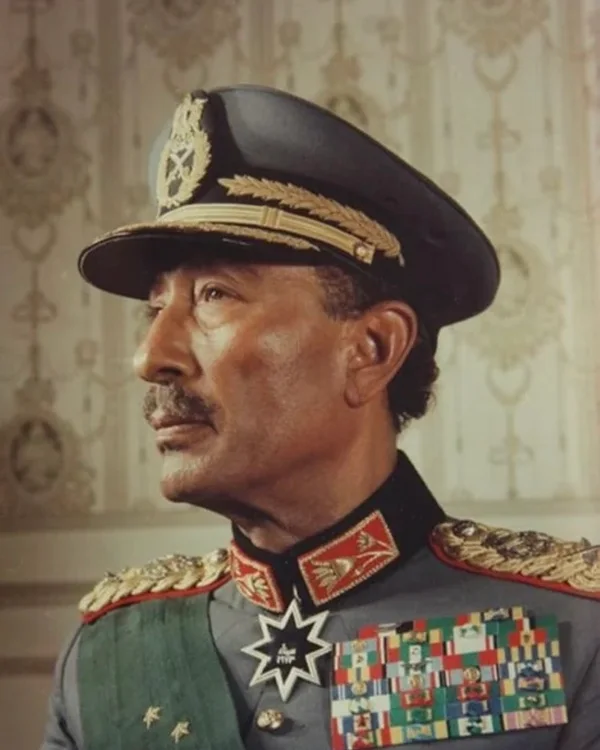
Sadat addressed the Knesset in Arabic, and the speech was broadcast worldwide. Alongside his call for peace he set out the Arab demands: withdrawal from the territories occupied in 1967 and a solution to the Palestinian question.

The lines that stayed
Anwar Sadat

I come to you today on solid ground, to shape a new life, to establish peace.

Address to the Knesset, Jerusalem, 20 November 1977

Source and status of the wording

Sadat spoke in Arabic. In the Arabic edition the sentence is given in his own words, as quoted by Al-Ahram's news gate (19 November 2014). The Arabic says literally "on two firm feet"; "on solid ground" is the wording of the English translation published by Israel's Ministry of Foreign Affairs, as reproduced by the Jewish Virtual Library.

Quote source: Jewish Virtual Library, reproducing Israel Ministry of Foreign Affairs

Anwar Sadat

Yet, today I tell you, and declare it to the whole world, that we accept to live with you in permanent peace based on justice.

Address to the Knesset, Jerusalem, 20 November 1977

Source and status of the wording

Sadat spoke in Arabic. The source is the English translation published by Israel's Ministry of Foreign Affairs, as reproduced by the Jewish Virtual Library.

Quote source: Jewish Virtual Library, reproducing Israel Ministry of Foreign Affairs

What was said

Anwar Sadat told the Knesset he had come to put the facts before the Israelis themselves, a grave risk taken without consulting other Arab leaders.1 He was not offering a separate deal: his peace required Israeli withdrawal from the territories occupied in 1967, Arab Jerusalem among them, a Palestinian right to self-determination and a state, and secure borders and an end to war for every state in the region.1 He closed by speaking to Israel's bereaved families.1

Backstage

  • In Arabic, then BeginSadat spoke in Arabic. Menachem Begin replied that everything was open to negotiation.2
  • 36 hours, 21 gunsThe whole visit lasted 36 hours. Israel greeted him with a 21-gun salute and both national anthems, and Golda Meir was waiting at the airport.2 He also visited Al-Aqsa Mosque, the Church of the Holy Sepulchre and Yad Vashem.2
  • Feast day, 70 per centThe speech fell on Eid al-Adha, and Sadat linked the day to Abraham.1 He even put a number on it: suspicion between the two sides, he said, was 70 per cent of the problem.1
The agreement page: Sadat's Visit to Jerusalem

Begin's Nobel Lecture

· Menachem Begin

The line that stayed

Menachem Begin

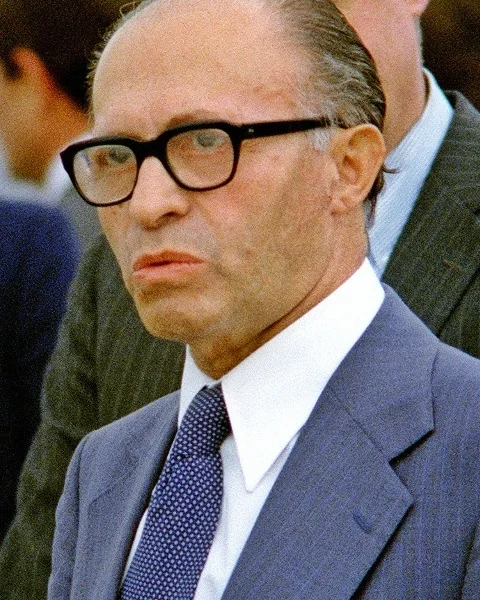
In the spirit of the Nobel Prize tradition we gave to each other the most momentous pledge: No more war. No more bloodshed. We shall negotiate and reach agreement.

Nobel Lecture, Oslo, 10 December 1978. Begin presents the words as a pledge he and Sadat gave each other – so the wording predates the peace treaty signing ceremony.

Source and status of the wording

Official Nobel Foundation text, in English; consecutive sentences.

Quote source: The Nobel Prize (Nobel Foundation)

What was said

Menachem Begin said in Oslo that the prize belonged not to him but to his people.3 He opened with Isaiah and Micah's swords beaten into ploughshares, spoke of the Holocaust, and said that those who fight for freedom hate war.3 He presented Sadat's visit and the Camp David Accords as a first step towards a comprehensive peace.3

Backstage

  • A ceremony in a fortressInstead of the usual university hall, the ceremony was held at Akershus, a 13th-century fortress above the fjord. According to the Jewish Telegraphic Agency, soldiers and police manned the walls, helicopters hovered overhead and gunboats guarded the sea.4
  • Sadat did not comeThe prize was shared with Sadat, but Sadat stayed away. Sayed Marei read his message, and Begin greeted him in the lecture as the representative of Egypt's president.43
  • A minute's silence for GoldaBegin opened with a tribute to Golda Meir, and the audience, the King of Norway among them, stood for a minute's silence in her memory.34 He said he would give his share of the prize, about 175,000 dollars, to a fund for children with intellectual disabilities.4

The agreement page: Sadat's Visit to Jerusalem

Begin at the treaty signing

· Menachem Begin

Begin's speech at the Egypt–Israel treaty signing

· Begin Center

At the ceremony sealing the first peace treaty between Israel and an Arab state, Begin declared an end to war, bloodshed and bereavement. Under the treaty Israel withdrew from all of Sinai, and the peace with Egypt has held ever since.

The line that stayed

Menachem Begin

No more war, no more bloodshed, no more bereavement.

Signing ceremony of the Egypt–Israel peace treaty, the White House, Washington, 26 March 1979

Source and status of the wording

Official US transcript (Public Papers of the Presidents), in English. These are the closing words of a longer sentence in Begin's remarks. The wording is singular – "war", not "wars".

Quote source: The American Presidency Project, UC Santa Barbara (Public Papers of the Presidents)

What was said

Menachem Begin spoke after Jimmy Carter and Anwar Sadat at the signing of the Egypt–Israel peace treaty. He recalled that Egypt and Israel had fought five times in one generation, and praised Sadat's civil courage and Carter's stubborn efforts.5 He spoke of his parents' home, gone because his parents were murdered in the Holocaust, and called this the third greatest day of his life, after independence in 1948 and the day Jerusalem became, in his words, one city.5

Backstage

  • A small amendment for CarterSadat had called Carter the unknown soldier of peacemaking. Begin agreed, but, as usual, with an amendment: Carter was not entirely unknown. The official transcript records laughter twice.5
  • A psalm, left untranslatedBegin spoke in English, but near the end he switched to Hebrew and recited Psalm 126. He told the audience he would not translate it.5
  • Signed first, spoke afterwardsThe treaty was signed before any of the speeches, with Carter as witness. Carter began speaking at 14:12 on the North Lawn of the White House, live on radio and television.5

The agreement page: Egypt–Israel Peace Treaty

The White House lawn ceremony

· Yitzhak Rabin, Yasser Arafat, Bill Clinton, Mahmoud Abbas

The Oslo signing: Yasser Arafat Foundation

· Yasser Arafat Foundation

Shimon Peres and Mahmoud Abbas signed, and Rabin and Arafat shook hands before the world: the first formal ceremony in which the two sides recognised each other.

The lines that stayed

Yitzhak Rabin

…we say to you today in a loud and a clear voice: enough of blood and tears. Enough.

Signing ceremony of the Israel–PLO Declaration of Principles, South Lawn of the White House, 13 September 1993

Source and status of the wording

Official White House transcript, in English. This is the end of a long sentence in which Rabin addresses the Palestinians, and the word that follows it; the opening of the sentence is omitted and marked with an ellipsis.

Quote source: The White House, Office of the Press Secretary (Clinton White House archive, US National Archives)

Yasser Arafat

Ladies and gentlemen, the battle for peace is the most difficult battle of our lives.

Signing ceremony of the Israel–PLO Declaration of Principles, South Lawn of the White House, 13 September 1993

Source and status of the wording

Arafat spoke in Arabic. The source is the English in the official White House transcript.

Quote source: The White House, Office of the Press Secretary (Clinton White House archive, US National Archives)

Bill Clinton

A peace of the brave is within our reach.

Signing ceremony of the Israel–PLO Declaration of Principles, South Lawn of the White House, 13 September 1993

Source and status of the wording

Official US text (Public Papers of the Presidents), in English.

Quote source: The American Presidency Project, UC Santa Barbara (Public Papers of the Presidents)

Mahmoud Abbas

We have come to this point because we believe that peaceful coexistence and cooperation are the only means for reaching understanding and for realizing the hopes of the Palestinians and the Israelis.

Signing ceremony of the Israel–PLO Declaration of Principles, South Lawn of the White House, 13 September 1993

Source and status of the wording

The source is the English in the official White House transcript.

Quote source: The White House, Office of the Press Secretary (Clinton White House archive, US National Archives)

What was said

Seven people spoke at the signing of the Declaration of Principles. Bill Clinton called the day a moment of history and hope.6 Yitzhak Rabin said the signing was not easy for him or for Israelis, remembered the victims of war and terror, and said Israel sought no revenge.6 Yasser Arafat spoke of the beginning of the end of a long chapter of pain, and Mahmoud Abbas of a new page with Israel.6

Backstage

  • Who actually signedThe picture people remember is Rabin and Arafat, but the document was signed by Foreign Minister Shimon Peres and Mahmoud Abbas, with the US secretary of state, Warren Christopher, and the Russian foreign minister, Andrei Kozyrev, as witnesses.6
  • The handshakeAccording to Reuters, Arafat held out his hand, Rabin hesitated, and Clinton gently nudged him forward. When they shook hands a sigh rose from some 3,000 guests, and Henry Kissinger wiped away tears.7
  • Same desk, and an AmenClinton noted that Begin, Sadat and Carter had signed at the same desk 14 years earlier.6 Rabin ended with a Jewish prayer and asked everyone to say Amen with him.6

The agreement page: Oslo I – the Declaration of Principles

Rabin at the US Congress

· Yitzhak Rabin

King Hussein and Rabin address Congress – C-SPAN archive

· C-SPAN

This is the archival record of the speech in which Rabin introduced himself by his military number and described himself as a soldier in the army of peace, a day after the Washington Declaration was signed.

Rabin’s speech starts at 40:55.

The line that stayed

Yitzhak Rabin

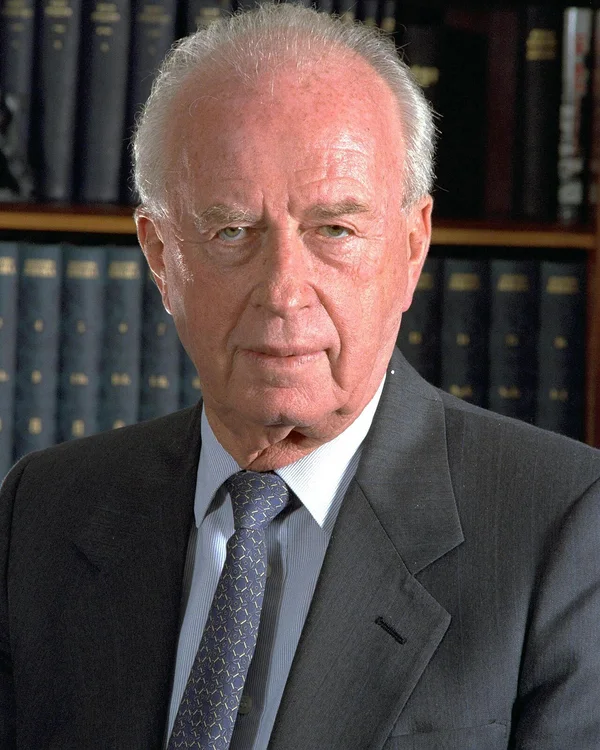
Yitzhak Rabin, soldier in the Israel Defense Forces, and a soldier in the army for peace

US Congress, Washington, 26 July 1994. An excerpt from the sentence in which Rabin introduces himself by his military number.

Source and status of the wording

The speech was delivered in English. A short excerpt from the Rabin Center's English transcript, not the full sentence; the transcript reads "army for peace". The Center's Hebrew text reads "חייל בצבא השלום" (a soldier in the army of peace).

Quote source: The Yitzhak Rabin Center

What was said

Yitzhak Rabin began his address to Congress in the military cemetery on Mount Herzl, where he stands every Memorial Day, and introduced himself as a man who had sent soldiers to their deaths.8 In the name of bereaved parents and orphans he asked that the deaths of the fallen be given meaning.8 He turned to King Hussein of Jordan, sitting in the chamber, spoke of enemies becoming good neighbours after the previous day's Washington Declaration, and thanked America.8

Backstage

  • Serial number 30743In the sentence the famous line comes from, Rabin introduces himself as a soldier does, by his serial number: 30743. The Rabin Center made that number the title of the whole speech.8
  • Peace, 237 timesRabin told Congress that the word peace appears in the Hebrew Bible 237 times, and closed with the Jewish blessing Shehecheyanu.8
  • The guests he broughtHe presented Israelis he had brought with him, bereaved family members and former soldiers among them, as people who dream of peace.8

The agreement page: The Washington Declaration

The signing in the Arava

· King Hussein of Jordan

King Hussein's speech at the Israel–Jordan treaty signing

· reds6476

Jordan became the second Arab state to make peace with Israel, and Hussein framed it as peace between peoples, not only governments.

The line that stayed

King Hussein of Jordan

This is peace with dignity. This is peace with commitment.

Signing ceremony of the Israel–Jordan peace treaty, Arava/Araba crossing, 26 October 1994

Source and status of the wording

Official White House transcript, in English.

Quote source: The White House, Office of the Press Secretary (Clinton White House archive, US National Archives)

What was said

At the signing of the Israel–Jordan peace treaty, King Hussein of Jordan said this valley would become a valley of peace, and that this peace was more than a piece of paper.9 Yitzhak Rabin said that when he looked at the Arava he saw desert and minefields, like 47 years of relations between the two countries; bereavement, he said, belonged to both sides.9 Bill Clinton said peace was no longer a mirage.9

Backstage

  • Desert heat, 5,000 guestsThe ceremony was held on the border itself, at the Arava crossing, in an arena built for 5,000 guests, in searing desert heat.910
  • King spoke, premiers signedThe treaty was signed not by the king but by the two prime ministers, Rabin and Abdul Salam Majali, with Clinton as witness.910
  • The man who stayed awayYasser Arafat, who had criticised the treaty, boycotted the ceremony, according to the news agency report. Clinton had met him in Cairo earlier that day.10

The agreement page: Israel–Jordan Peace Treaty

Peres and Arafat's Nobel lectures

· Shimon Peres, Yasser Arafat

Peres's Nobel Peace Prize acceptance speech

· Peres

The prize honoured all three for their efforts for peace in the Middle East, and Peres used the moment to sketch a vision of a cooperative region.

The lines that stayed

Shimon Peres

There was a time when war was fought for lack of choice. Today it is peace that is the "no-choice" option.

Nobel Lecture, Oslo, December 1994

Source and status of the wording

The English text published by the Nobel Foundation; two consecutive sentences.

Quote source: The Nobel Prize (Nobel Foundation)

Yasser Arafat

Peace, for us, is an asset and in our interest.

Nobel Lecture, Oslo, December 1994

Source and status of the wording

The lecture was given in Arabic. The source is the English translation published by the Nobel Foundation.

Quote source: The Nobel Prize (Nobel Foundation)

What was said

Shimon Peres argued that war was losing its point: power now comes from knowledge rather than territory, and science can be learned but cannot be conquered. So peace, he said, had no alternative.11 Yasser Arafat called peace a Palestinian interest, urged faster implementation, including further withdrawal, elections and the release of prisoners, and warned that without care the wager on peace could be lost.12

Backstage

  • A committee member resignedThe 1994 prize went to Arafat, Peres and Yitzhak Rabin. According to the Nobel Prize website, committee member Kåre Kristiansen resigned in protest at the decision.13
  • The town Peres came fromPeres began with the small Jewish town in White Russia where he was born, of which nothing Jewish was left. A person, he said, can feel as old as his years and as young as his dreams.11
  • Arafat: partners in peaceArafat spoke in Arabic and opened with a verse from the Quran about inclining towards peace. He called Rabin and Peres his partners in peace.12

The agreement page: Oslo I – the Declaration of Principles

Rabin's last speech

Rabin’s full speech at the “Yes to Peace, No to Violence” rally

· Dan-Eyal Gazit

Yitzhak Rabin’s full speech at the “Yes to Peace, No to Violence” rally in Kings of Israel Square, Tel Aviv, 4 November 1995. He was assassinated minutes later.

What was said

Yitzhak Rabin thanked the crowd in Tel Aviv for coming to stand against violence and for peace. He had been a soldier for 27 years, he said, and fought as long as peace had no chance; now there was a chance, a great one, and it had to be taken.14 Violence, he warned, eats away at the foundations of Israeli democracy, and disputes are settled at elections.14 Peace has its pain, he said, but its path is better than the path of war.14

Backstage

  • A few hundred wordsThe speech is very short, a few hundred words. Even so, Rabin found room in it to thank the representatives of Egypt, Jordan and Morocco who had come to the rally.14
  • They sang togetherTwo days later, at the funeral, Shimon Peres recalled that he and Rabin had sung the Song for Peace together at the rally.15
  • After the rallyAfter the rally Yigal Amir, a Jewish Israeli who opposed the Oslo process, murdered Rabin.15 Leaders from 80 countries came to his funeral on Mount Herzl.15

The agreement page: Oslo II – the Interim Agreement

“Shalom, chaver”

· Bill Clinton

Rabin’s full speech at the “Yes to Peace, No to Violence” rally

· Dan-Eyal Gazit

Yitzhak Rabin’s full speech at the “Yes to Peace, No to Violence” rally in Kings of Israel Square, Tel Aviv, 4 November 1995. He was assassinated minutes later.

The line that stayed

Bill Clinton

Because words cannot express my true feelings, let me just say, shalom, chaver, goodbye, friend.

Remarks on the death of Prime Minister Yitzhak Rabin, Rose Garden of the White House, 4 November 1995 – on the night of the assassination, not at the funeral

Source and status of the wording

Official US text (Public Papers of the Presidents), in English with two Hebrew words.

Quote source: US Government Publishing Office (Public Papers of the Presidents: William J. Clinton, 1995, Book II)

What was said

In the Rose Garden, on the evening of the murder, Bill Clinton said Yitzhak Rabin had risked his life for half a century to defend his country, and had given it to bring his country peace.16 He sent condolences to Leah Rabin and her children, and told Israelis that Americans shared their grief.16 He ended with the two Hebrew words that became the emblem of the farewell to Rabin.16

Backstage

  • 17:48, the Rose GardenThe words were spoken not at the funeral but at the White House, on the very evening of the murder. According to the official record, Clinton spoke at 17:48, Washington time.16
  • Who gave him the wordsClinton later wrote that Hebrew-speaking Jewish members of his staff gave him the phrase. Soon after the funeral, by his account, it was on billboards and bumper stickers in Israel.17
  • The tieAt the funeral Clinton told a small story: Rabin once turned up at a black-tie event without the tie, borrowed one, and Clinton straightened it for him. It was a moment, he said, that he would cherish as long as he lived.15

The agreement page: Oslo II – the Interim Agreement

King Hussein's eulogy for Rabin

· King Hussein of Jordan

Rabin's state funeral – Clinton's eulogy

· clintonlibrary42

Leaders from around the world attended, among them the King of Jordan and the President of Egypt. Their presence showed how far the region had changed during Rabin's years in office.

The line that stayed

King Hussein of Jordan

You died as a soldier for peace and I believe it is time for all of us to come out openly and to speak of peace.

Eulogy at Yitzhak Rabin's funeral, Mount Herzl, Jerusalem, 6 November 1995

Source and status of the wording

English text published by Israel's Ministry of Foreign Affairs, as reproduced by the Jewish Virtual Library.

Quote source: Jewish Virtual Library, reproducing Israel Ministry of Foreign Affairs

What was said

King Hussein of Jordan said farewell to Yitzhak Rabin as a brother, a colleague and a friend.15 He called on those who believe in peace not to stay silent, but to raise their voices against the enemies of light.15 He pledged to continue on Rabin's path, and said the peace-loving majority in Jordan was mourning too.15

Backstage

  • Jerusalem, boy and grandfatherHussein said it had never occurred to him that his first visit to Jerusalem would come on such an occasion.15 As a boy he had stood beside his grandfather, King Abdullah, when an assassin shot him dead in Jerusalem in 1951; according to the Jewish Virtual Library, a medal his grandfather had given him saved Hussein from the assassin's bullet.18
  • Two soldiers for peaceSome 15 months earlier, at the US Congress, Rabin had introduced himself as a soldier in the army of peace, with Hussein sitting in the chamber.8 At the funeral the king answered him in the same terms, in the line that became famous.15
  • Who else spokeThe other eulogies came from Egypt's president, Hosni Mubarak, Bill Clinton, Shimon Peres and Rabin's granddaughter, Noa Ben-Artzi, who spoke of him not as a statesman but as her grandfather.15

The agreement page: Israel–Jordan Peace Treaty

The Bar-Ilan speech

· Benjamin Netanyahu

Netanyahu's Bar-Ilan speech – English version

· Bar-Ilan University - אוניברסיטת בר-אילן

In this speech Netanyahu said he would be ready, on conditions, for a demilitarised Palestinian state beside the Jewish state. That was his position then; in later years he declared that there would be no Palestinian state.

The line that stayed

Benjamin Netanyahu

In my vision of peace, in this small land of ours, two peoples live freely, side-by-side, in amity and mutual respect.

Speech at Bar-Ilan University, Ramat Gan, 14 June 2009. In the same speech he made his readiness for a demilitarised Palestinian state beside the Jewish state conditional on Palestinian recognition of Israel as the state of the Jewish people and on security guarantees. This was his position in that speech, not his policy today.

Source and status of the wording

One sentence from the Hebrew text of the speech as published by ynet and archived in the ECF database.

Quote source: Economic Cooperation Foundation (ECF) – Hebrew text of the speech as published by ynet

What was said

Benjamin Netanyahu called on Arab leaders to meet him, and on the Palestinians to begin negotiations at once and without preconditions.19 The root of the conflict, he said, was the refusal to recognise the Jewish people's right to a state in its homeland. If the Palestinians recognised Israel as the state of the Jewish people, and real demilitarisation were guaranteed, Israel would accept a demilitarised Palestinian state beside it.19 He also said the refugee problem must be solved outside Israel's borders, that Jerusalem would remain united and that no new settlements would be built.19

Backstage

  • Named after Begin and SadatHe spoke at a research centre named after Menachem Begin and Anwar Sadat, said he shared their vision, and near the end named them again, together with Yitzhak Rabin and King Hussein of Jordan.19
  • Ten days after ObamaThe speech came ten days after Barack Obama's address to the Muslim world, in which he vowed to pursue a two-state solution. According to Al Jazeera, it was the first time Netanyahu had endorsed a Palestinian state.20
  • The Palestinian responseThe Palestinian response that day was negative. Nabil Abu Rudeineh, spokesman for Mahmoud Abbas, said the remarks had sabotaged all initiatives, and Saeb Erekat urged Obama to make Israel honour the earlier interim agreements, including a settlement freeze.20

The Abraham Accords ceremony

· Benjamin Netanyahu, Abdullah bin Zayed Al Nahyan, Abdullatif Al Zayani, Donald Trump

Netanyahu's speech at the Abraham Accords signing

· IsraeliPM

Netanyahu led the move on Israel's side, and the Abraham Accords opened a new chapter of open ties with Gulf states.

The lines that stayed

Benjamin Netanyahu

Ladies and gentlemen, Mr. President, this day is a pivot of history. It heralds a new dawn of peace.

Abraham Accords signing ceremony, South Lawn of the White House, 15 September 2020

Source and status of the wording

Official White House transcript, in English.

Quote source: The White House (Trump White House archive, US National Archives)

I stand here today to extend a hand of peace and receive a hand of peace.

Abraham Accords signing ceremony, South Lawn of the White House, 15 September 2020

Source and status of the wording

The minister spoke in Arabic. In the Arabic edition the sentence is given in the Arabic wording published by the Emirates News Agency (WAM), as carried by the newspaper Al Bayan on 16 September 2020. The English text is from the official White House transcript, which marks his remarks "(As interpreted.)" – this is the interpreter's English.

Quote source: The White House (Trump White House archive, US National Archives)

Abdullatif Al Zayani

Today — today is a truly historic occasion, a moment of hope and opportunity for all the peoples of the Middle East.

Abraham Accords signing ceremony, South Lawn of the White House, 15 September 2020

Source and status of the wording

Official White House transcript, in English.

Quote source: The White House (Trump White House archive, US National Archives)

Donald Trump

After decades of division and conflict, we mark the dawn of a new Middle East.

Abraham Accords signing ceremony, South Lawn of the White House, 15 September 2020

Source and status of the wording

Official White House transcript, in English.

Quote source: The White House (Trump White House archive, US National Archives)

What was said

At the signing of the Abraham Accords, Donald Trump said these were Israel's first agreements with Arab states in more than a quarter of a century, and that more countries would follow.21 Benjamin Netanyahu spoke of the price of war: he had been wounded in battle, and his brother Yoni was killed at Entebbe.21 Speaking in Arabic, Abdullah bin Zayed Al Nahyan thanked Netanyahu for halting annexation and said the Emirates would keep standing by the Palestinian people and their hope for an independent state; Abdullatif Al Zayani said a just, comprehensive and enduring two-state solution was the foundation of lasting peace.21

Backstage

  • 43 minutes, three languagesAccording to the official transcript, the whole ceremony lasted 43 minutes. Three documents were signed, in copies in English, Hebrew and Arabic.21
  • One premier, two foreign ministersIsrael sent its prime minister; the United Arab Emirates and Bahrain sent their foreign ministers.22 Hundreds of guests stood on the lawn, most without masks, in the middle of the Covid-19 pandemic.22
  • Meanwhile, that same hourDuring the ceremony two rockets were fired from the Gaza Strip at Israel. Sirens sounded in Ashdod and Ashkelon, one rocket was intercepted, and two people were hurt by broken glass.22 The Palestinian leadership rejected the accords, according to the same report, and small protests were held in the West Bank and Gaza.22

The agreement page: The Abraham Accords – the framework declaration

Sources

You do not have to agree with us. That is what the sources are for: open them, compare and check for yourself.

  1. Official archive Jewish Virtual Library, reproducing Israel Ministry of Foreign Affairs · 20 November 1977
    Statement to the Knesset by President Sadat, 20 November 1977
  2. Primary US Department of State, Office of the Historian (Foreign Relations of the United States, 1977–1980, vol. VIII)
    152. Editorial Note (Sadat's visit to Jerusalem, 19–21 November 1977)
  3. Primary The Nobel Prize (Nobel Foundation) · 10 December 1978
    Menachem Begin – Nobel Lecture, 10 December 1978
  4. Press Jewish Telegraphic Agency (JTA), archive · 11 December 1978
    Begin Receives Nobel Peace Prize
  5. Primary The American Presidency Project, UC Santa Barbara (Public Papers of the Presidents) · 26 March 1979
    Remarks of President Carter, President Anwar al-Sadat of Egypt, and Prime Minister Menahem Begin of Israel at the Egyptian-Israeli Peace Treaty Signing Ceremony
  6. Primary The White House, Office of the Press Secretary (Clinton White House archive, US National Archives) · 13 September 1993
    Remarks by the President and others at the Israeli-Palestinian signing ceremony, 13 September 1993
  7. Press Reuters, as published by The Christian Science Monitor · 15 September 1993
    Mideast Agreement Signed Amid Hope and Some Tears
  8. Official archive The Yitzhak Rabin Center · 26 July 1994
    I, 30743, Yitzhak Rabin – Remarks to the US Congress, 26 July 1994
  9. Primary The White House, Office of the Press Secretary (Clinton White House archive, US National Archives) · 26 October 1994
    Clinton, Hussein and Rabin on the peace treaty signing, 26 October 1994
  10. Press AP and Reuters, as published by The Christian Science Monitor · 27 October 1994
    Peace Shines Over Jordan River
  11. Primary The Nobel Prize (Nobel Foundation)
    Shimon Peres – Nobel Lecture, 1994
  12. Primary The Nobel Prize (Nobel Foundation)
    Yasser Arafat – Nobel Lecture, 1994 (translation from the Arabic text by D. Karara)
  13. Reference The Nobel Prize (Nobel Foundation)
    Kåre Kristiansen – short biography (members of the Norwegian Nobel Committee)
  14. Official archive The Yitzhak Rabin Center · 4 November 1995
    The Last Speech (1995)
  15. Official archive Jewish Virtual Library, reproducing Israel Ministry of Foreign Affairs · 6 November 1995
    Eulogies at the Funeral of Yitzhak Rabin, 6 November 1995
  16. Primary US Government Publishing Office (Public Papers of the Presidents: William J. Clinton, 1995, Book II) · 4 November 1995
    Remarks on the Death of Prime Minister Yitzhak Rabin of Israel, 4 November 1995
  17. Press Jewish Telegraphic Agency (JTA), excerpts from Bill Clinton's memoir · 22 June 2004
    Clinton, in his own words
  18. Reference Jewish Virtual Library
    King Hussein bin Talal (biography)
  19. Primary Economic Cooperation Foundation (ECF) – Hebrew text of the speech as published by ynet · 14 June 2009
    Israeli PM Netanyahu's Bar-Ilan Speech - Hebrew (2009)
  20. Press Al Jazeera English · 14 June 2009
    Israeli PM lays out peace terms
  21. Primary The White House (Trump White House archive, US National Archives) · 15 September 2020
    Remarks by President Trump, Prime Minister Netanyahu, Minister bin Zayed, and Minister Al Zayani at the Abraham Accords Signing Ceremony
  22. Press CBC News, with Associated Press reporting · 15 September 2020
    Israel, 2 Gulf nations seal new accords at White House ceremony, angering Palestinians