Remembrance · Democracy · Peace
Rabin’s assassination: a line crossed
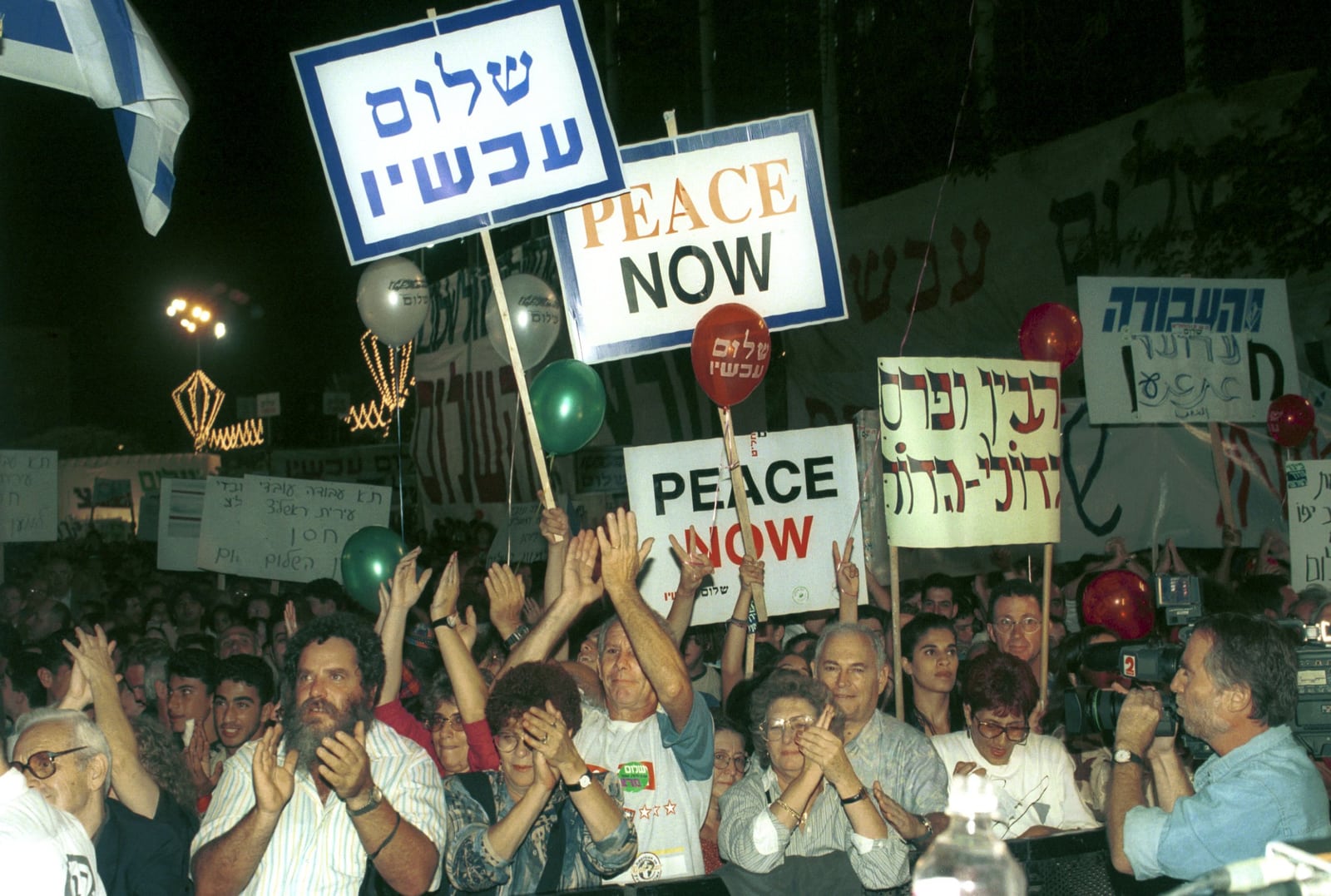
The crowd on 4 November 1995: peace signs, balloons and applause in Kings of Israel Square.
Photograph: Gideon Markowiz / IPPA, Dan Hadani Archive, the Pritzker Family National Photography Collection, National Library of Israel.Photograph record at the National Library of Israel ↗ · CC BY 4.0A prime minister was murdered over his political course. The attack struck a person, a democracy and the possibility of settling disagreement without violence. Remember the night. Understand what must be protected.
Kings of Israel Square, Tel Aviv · now Rabin Square
The person behind the moment
Rabin came to peacemaking from a life in security. He was IDF chief of staff during the Six-Day War, Israel’s ambassador to the United States, and prime minister in 1974–1977 and again from 1992. His second government advanced the Oslo Accords and the peace treaty with Jordan. In 1994 he shared the Nobel Peace Prize with Shimon Peres and Yasser Arafat.12
His journey connects military experience, political responsibility and a willingness to try another path.
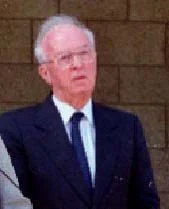

Yitzhak Rabin1922–1995Rabin: the full profile
Disagreement is a right. Violence is not an opinion.
Oslo provoked fierce disagreement amid terrorism, fear and uncertainty. Opposing an agreement, demonstrating, criticizing a leader and seeking a change of government are democratic rights. They are not the same as incitement, threats or making a leader a target for violence. Severe personal incitement against Rabin was also documented before the assassination.1
The distinction matters: not every opponent of Oslo bears responsibility for the murderer’s act. Responsibility for the murder belongs to its perpetrator and those who assisted him; protecting the boundaries of democratic debate is a shared civic responsibility. Political disagreement never licenses taking another person’s life.
A rally for hope, at the end of an evening
On Saturday evening, 4 November 1995, a rally was held in Kings of Israel Square in Tel Aviv under the banner “Yes to Peace, No to Violence.”3
At the close, Miri Aloni, Rabin, Peres and the crowd sang Shir LaShalom, the Song for Peace. Rabin then left the stage for his car. Yigal Amir shot him; he was taken to Ichilov Hospital, where he died of his wounds.43
The final speech
Rabin spoke as a former soldier determined to pursue a chance for peace, not as someone promising a path free of risk or pain. He connected political disagreement with decisions made through elections and called for violence to be isolated and condemned.5
Only a short excerpt appears here. The Rabin Center provides the full Hebrew text and an English translation; they are not licensed for unrestricted reuse. The AP video is archival footage from the evening, not the complete speech.6
Violence erodes the foundation of Israeli democracy.
The player loads only after you choose it. YouTube privacy practices and availability apply.
A single sheet, left behind
The sheet bearing the words of Shir LaShalom, found in Rabin’s pocket stained with his blood, became an especially charged memorial object. It connects the shared singing on stage with what followed. The linked photograph is credited to Yaacov Sa’ar of the Government Press Office.7
We do not recreate the bloodstains or reproduce the lyrics here. View the object in its source record and hear the performance in KAN’s archival video. Rights in the photograph and the song are separate.
View the photographed sheet in its archive record ↗The photograph and lyrics are not reproduced here. The link opens the archival record with its original credit and rights.The player loads only after you choose it. YouTube privacy practices and availability apply.
“The government of Israel announces in shock”
Eitan Haber, director of the prime minister’s bureau, appeared before the public and announced Rabin’s death. His words and voice became a defining public memory of that night.8
Yossi Sarid suggested adding the words “in shock” to the announcement. Eitan Haber recounted this in a filmed interview in 2019.9
Eitan Haber’s announcement
The player loads only after you choose it. YouTube privacy practices and availability apply.
A blow to the process, not the end of history
The assassination removed a prime minister who had led the process and dealt a profound blow to trust and democratic life. But “the murder of the peace process” describes the rupture; it does not mean all negotiations stopped that night. The Hebron Protocol (1997), Wye River Memorandum (1998) and further talks followed.1011
We cannot know with certainty where Rabin would have taken the process had he lived. An armed citizen has no right to replace democratic decisions. Remembering him means protecting room for disagreement, without making room for murder.
When do we remember?
4 November is the civil anniversary. The assassination occurred on the night of 12 Heshvan 5756 in the Hebrew calendar. Israel’s official memorial day is set for 12 Heshvan, with rules that may shift the observance. The Ministry of Education publishes the current date.12
A small home-page remembrance strip appears on 4 November, according to the date in Israel. In 2026 it also appears on the official observance, 22 October. It offers a moment to pause without hiding the other stories or the opportunity to keep learning.12