Room for Peace

Israel and the PalestiniansWashington

Oslo II – the Interim Agreement

Interim agreementInterim arrangement still applying

An interim agreement that extended Palestinian self-government to the West Bank. It is not a peace treaty and not a permanent settlement: it fixes no border and creates no state.

In one sentence

To hand the towns and villages of the West Bank to Palestinian administration until a permanent settlement is reached.

In 30 seconds

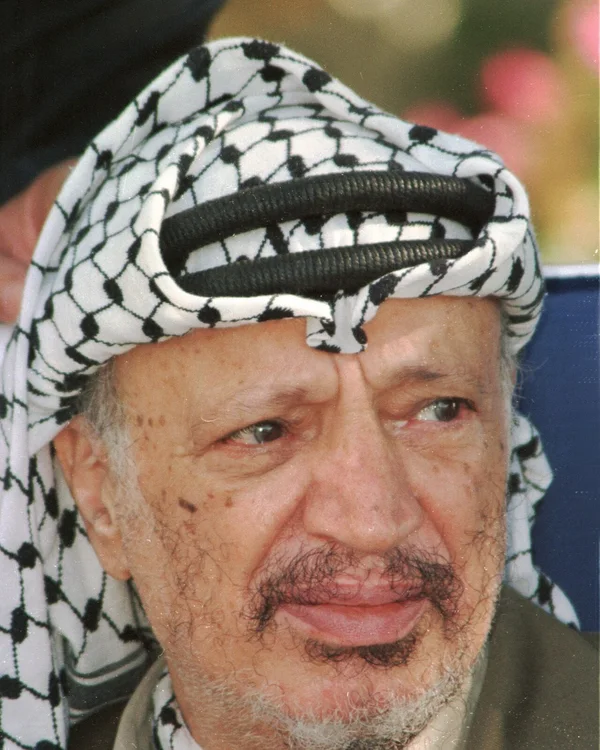
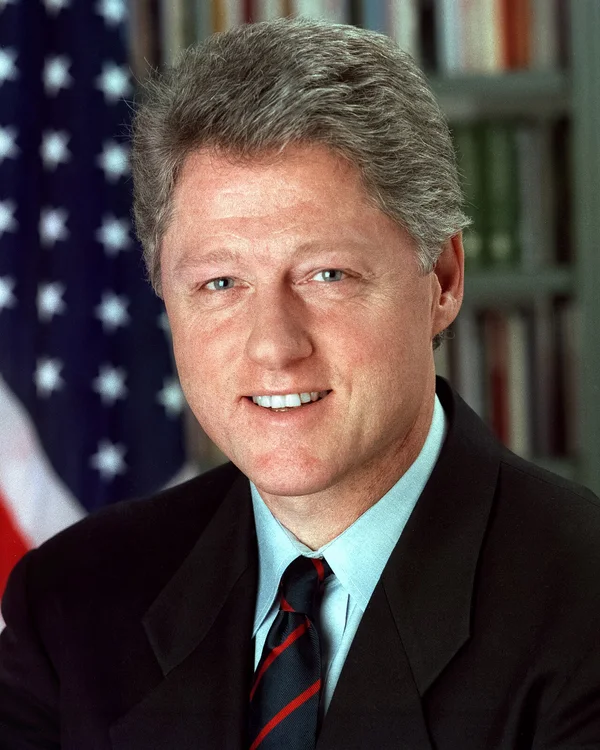
On 28 September 1995 Yitzhak Rabin and Yasser Arafat signed the Interim Agreement (glossary) in Washington.⁠1 It divided the West Bank into Areas A, B and C, put the cities under Palestinian administration and set elections.⁠1 It was designed for five years, but the map it drew is still there today.⁠2

Where it stands today

The agreement was meant for five years,⁠1 but with no permanent settlement the division into Areas A, B and C still applies by default. As of October 2026, Security Council Report records thousands of settlement housing units being advanced in Area C and more than 1,600 settler attacks on Palestinians since the start of the year.⁠3

Status checked on

The challenge

Since 1994 the Palestinian Authority had operated only in Gaza and Jericho.⁠5 The Declaration of Principles required an agreement to widen self-government and allow elections.⁠6

Palestinians wanted to run their own lives in the towns and villages. Israel wanted to keep responsibility for security and control of the settlements until permanent status.⁠1

The road there

  1. The Gaza–Jericho Agreement is signed in Cairo.⁠5
  2. The Interim Agreement is signed in Washington.⁠1 Rabin and Peres signed for Israel; Arafat for the PLO.⁠7
  3. The Knesset approves the agreement by 61 votes to 59.⁠8
  4. The date set for the Israeli army to leave Jenin.⁠8
  5. Prime Minister Yitzhak Rabin is assassinated in Tel Aviv.⁠4
  6. Elections for the Palestinian Council and the head of the Authority.⁠9

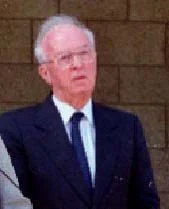
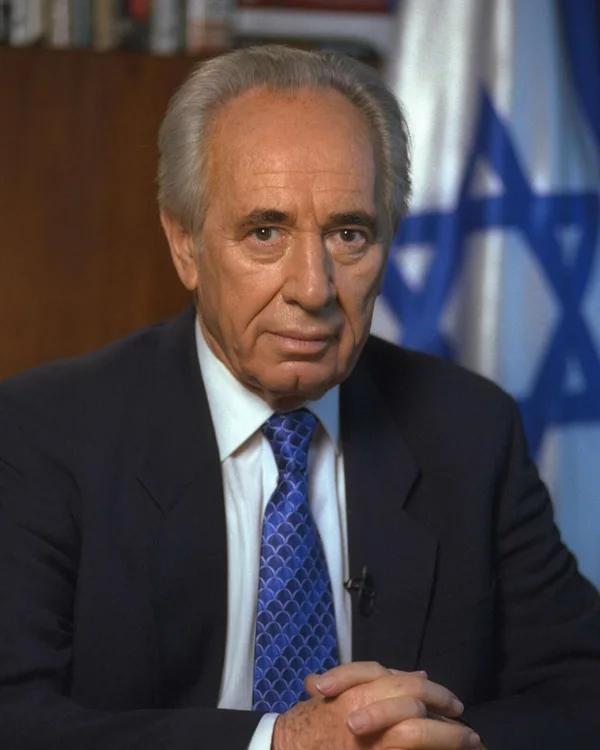
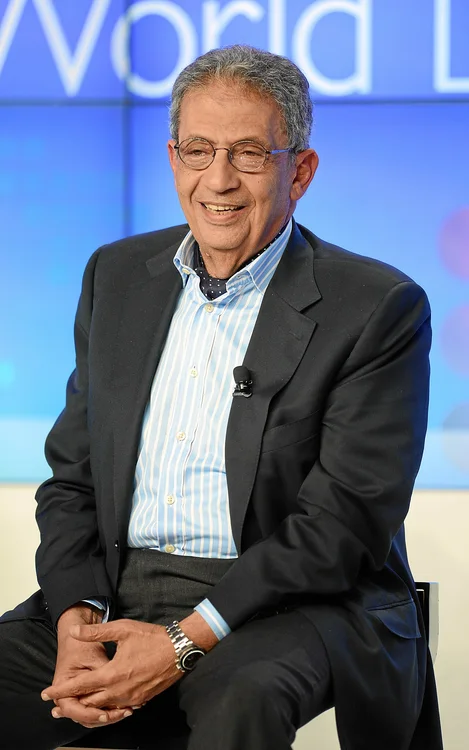
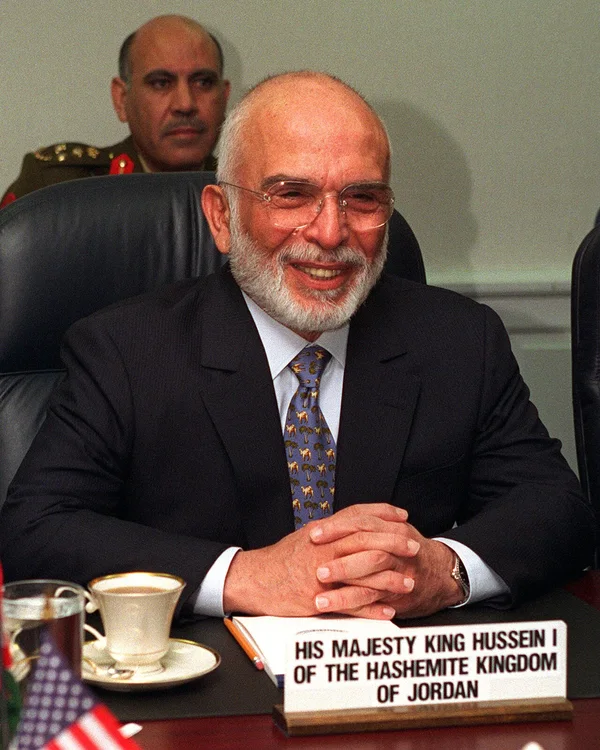
The people

What was agreed

  1. Area A, the Palestinian cities (except Hebron): full Palestinian responsibility, civil and security.⁠1
  2. Area B, the Palestinian villages: Palestinian civil responsibility, with overriding Israeli responsibility for security and counter-terrorism.⁠1
  3. Area C: initially Israeli security and land control; agreed transfer of non-territorial civil powers to the Palestinian Council.⁠7
  4. Democratic elections for a Palestinian Council.⁠1
  5. The agreement replaces the Gaza–Jericho Agreement and hands the Authority more powers,⁠5 within the five-year interim period begun on 4 May 1994⁠10 during which permanent-status talks are to take place.⁠1
  6. Oslo II required both sides to prevent terrorism and prosecute offenders; it also restricted armed forces and weapons (XV(1); XIV(3–4)).⁠7 These are commitments in the text; their inclusion does not establish that they were fulfilled or that attacks were prevented.

The geography

100%
Schematic map of Israel and its neighbours with line typesWest BankGaza StripJerusalemTel AvivGazaRamallahAmmanRafahNaharayim / Baqura
How to use the map

Choose a country on the map or in the list. One finger scrolls the page; two fingers move and pinch the map. You can also use + and −. For one-finger map dragging, enable the button above. Keyboard: arrows to pan, + and − to zoom, Home to reset.

Layers

Classification follows the original research as of 7 Oct 2026. This schematic map is not a legal boundary map or a live update.

  • International boundary agreed in a peace treaty
  • Treaty line with Jordan, “without prejudice to the status” of the territory beyond it
  • 1949 armistice line (“Green Line”) — not an agreed final border
  • “Blue Line” — UN line of withdrawal (2000), not a border
  • Ceasefire / disengagement line with Syria (1974)
  • Other international boundary
  • West Bank and Gaza Strip: permanent status not agreed
  • Golan Heights: held by Israel since 1967; annexation not recognised by the UN
  • UN area of separation (UNDOF); Israeli army positions inside it since December 2024

Schematic map. Lines are approximate and are not a legal determination. Data: Natural Earth (public domain), 1:10m scale; line classification and place names by this site. Lines as of October 2026. Peace map

The hard decisions

  • The agreement itself gives no percentages. According to B'Tselem, after the later redeployments about 18% of the West Bank is Area A, about 22% Area B and about 60% Area C;⁠11 the UN humanitarian office, OCHA, likewise puts Area C at over 60%.⁠2
  • The agreement came after a year and a half of severe attacks by Hamas and Islamic Jihad. According to the JTA list, 22 people were murdered on a bus in Tel Aviv on 19 October 1994, and 22 at the Beit Lid junction on 22 January 1995.⁠12
  • The Knesset approved the agreement by a margin of two votes, 61 to 59.⁠8 On 4 November 1995, at the end of a peace rally in Tel Aviv, Rabin was murdered by Yigal Amir, an Israeli law student. According to ECF, the motive was his opposition to the Oslo process.⁠4
  • Hamas rejected the process and boycotted the 1996 elections.⁠9 In February and March 1996 Hamas suicide bombers murdered 59 people in Israel, in four attacks.⁠12

Where accounts differ

According to Israeli critics of the agreement
The agreement handed the West Bank cities to the Authority while the attacks went on: from April 1994 until it was signed, dozens of Israelis were murdered in suicide bombings.⁠12 According to the historian Avi Shlaim, Benjamin Netanyahu opposed the process, and as prime minister demanded reciprocity from the Palestinians.⁠13 Israeli governments said the Authority incited, released terrorists and did not collect illegal weapons.⁠14
According to Israeli supporters of the agreement
The agreement put daily life in the towns and villages into Palestinian hands and left overriding responsibility for security with Israel.⁠1 Reuven Merhav, a former director general of the foreign ministry, said in 2001 that the process entrenched mutual recognition and the principle of two states.⁠15
According to Palestinian critics of the agreement
The interim arrangement became permanent, and meanwhile the ground changed. Ziad Abu-Zayyad said in 2001 that Israel's leadership stopped implementing the agreement: new settlements and no redeployment.⁠15 The PLO told the Mitchell Committee that the number of settlers in the West Bank had doubled since Oslo,⁠14 and Avi Shlaim notes that seven years after Oslo Israel still held full control of 61% of the West Bank.⁠13
According to Hamas and Islamic Jihad
Both organisations rejected the whole process, and Rabin had expected their opposition.⁠16 The JTA list attributes to them the suicide bombings of 1994⁠–⁠1996, in which dozens of people were murdered in Israel.⁠12 Hamas boycotted the 1996 elections.⁠9
According to Researchers, and the Mitchell Committee (2001)
There is no single explanation. Khalil Shikaki: an open-ended agreement with no final goal, during which settlement building went on.⁠15 Avi Shlaim: the failure lay in implementation; he points to the Netanyahu government, which in his account did not hand over the 13% promised at Wye River, and to Arafat, who did not make the talks conditional on a building freeze.⁠13 The US Office of the Historian stresses Rabin's assassination and the Hamas attacks that followed.⁠17 The Mitchell Committee recommended both a freeze on settlement building and a full effort by the Authority to prevent attacks.⁠14

What was carried out 2

  • The Israeli army began leaving the West Bank cities in autumn 1995.⁠8 Hebron stayed outside Area A until the Hebron Protocol of 1997.⁠18
  • The elections were held on 20 January 1996, and Arafat was elected head of the Authority.⁠9

What was not 2

  • No permanent settlement was reached within the five years, and the interim arrangements were never replaced.⁠17
  • The further redeployments the agreement foresaw were not completed on time; the Wye River Memorandum of 1998 tried to move them forward.⁠19

What changed in real life

  • Since then Palestinians in the West Bank have lived under three regimes: in the cities the police and administration are Palestinian; in the villages the administration is Palestinian and security is in Israel's hands; in Area C security and land remain under Israeli control.⁠17
  • According to Anera, about 300,000 Palestinians and about 400,000 Israeli settlers now live in Area C, with wide restrictions because of military zones and state land.⁠20
  • According to Israel's Central Bureau of Statistics, the number of settlers in the West Bank and Gaza rose from 115,700 at the end of 1993 to 176,973 in mid-1999, not counting East Jerusalem.⁠21
  • Israel imposed repeated closures: 326 days of full closure in the West Bank between December 1993 and November 2000, according to official figures compiled by B'Tselem.⁠21 Of the closures from autumn 2000, the Mitchell Committee wrote that they kept about 140,000 Palestinians from working in Israel; Israel's government presented them as security measures.⁠14

What remains open

  • Rabin's assassination removed the Israeli leader who had signed the agreement. Shimon Peres succeeded him and lost the election of May 1996.⁠4 According to the US Office of the Historian, the Hamas attacks that followed the murder undermined support for Labour.⁠17 The assassination is one of several factors that damaged the process, not a single explanation.
  • An arrangement designed for five years has shaped life in the West Bank for more than thirty. Borders, Jerusalem, refugees and settlements are still open.⁠6
  • The agreement did not prevent settlement expansion in Area C; as of 2026 construction there continues.⁠3

Photos, videos and quotes

To watch 10

Clinton at the Oslo II interim agreement signing

Event date: · clintonlibrary42

The agreement divided the West Bank into Areas A, B and C and set the first Palestinian elections.

Rabin’s last speech at the “Yes to Peace, No to Violence” rally

Event date: · Dan-Eyal Gazit

Yitzhak Rabin’s last speech at the “Yes to Peace, No to Violence” rally in Kings of Israel Square, Tel Aviv, 4 November 1995. He was assassinated minutes later.

Rabin's last speech at the Tel Aviv rally – AP footage

Event date: · AP Archive

At the rally held under the slogan “Yes to peace, no to violence”, Rabin gave his last speech. Minutes after leaving the stage he was shot dead by a Jewish Israeli assassin; the square has borne his name ever since.

Clinton's remarks on the death of Rabin

Event date: · clintonlibrary42

Hours after the assassination, the US president bade Rabin farewell in a short statement that ended with the Hebrew words “Shalom, chaver”. The phrase became a symbol of mourning for Rabin in Israel.

More from the archive (6)

Rabin's state funeral – Clinton's eulogy

Event date: · clintonlibrary42

Leaders from around the world attended, among them the King of Jordan and the President of Egypt. Their presence showed how far the region had changed during Rabin's years in office.

World leaders at Rabin's funeral

Event date: · AP Archive

The funeral became a rare moment of regional leaders standing together in Jerusalem, with King Hussein mourning Rabin as a brother and friend.

How Israeli TV covered the Oslo II signing

Event date: · החדשות הישנות

An inside look at how the Israeli public met the agreement, just weeks before Rabin's assassination.

Rabin's last speech – Channel 2 broadcast in Hebrew

Event date: · החדשות הישנות

This is the speech in its original language, as broadcast to the Israeli public that evening. In it Rabin said violence was eroding the foundations of Israeli democracy; shortly afterwards he was murdered.

Rabin's funeral and the eulogies – AP footage

Event date: · AP Archive

At the funeral King Hussein eulogised Rabin as a brother, colleague and friend – only a year after the two signed the peace treaty. President Mubarak, President Clinton and Rabin's granddaughter Noa Ben Artzi also spoke.

“Shalom, chaver”: Clinton's eulogy for Rabin

Event date: · AmericanRhetoric.com

The two words became a symbol of the mourning for Rabin and of the personal bond built around the peace process.

Sources

Open the sources, compare and check for yourself.

What can this source tell us?

A document shows what was written; testimony tells what someone saw or remembers; research and reporting add interpretation and comparison. Always ask who produced the information and what still needs checking. The label alone does not establish quality, and two sites copying one document still give you one source.

Practise checking sources
Show all sources (25)Hide the sources

Cited on this page

  1. Israeli-Palestinian Interim Agreement (Oslo II, 1995)Research Economic Cooperation Foundation (ECF)
  2. Area C of the West Bank: Key Humanitarian Concerns (fact sheet, August 2014)Primary United Nations Office for the Coordination of Humanitarian Affairs (OCHA), occupied Palestinian territory18 August 2014
  3. The Middle East, including the Palestinian Question — October 2026 Monthly ForecastResearch Security Council Report1 October 2026
  4. Assassination of Yitzhak Rabin (1995)Research Economic Cooperation Foundation (ECF)
  5. Cairo Agreement on Gaza and Jericho (1994)Research Economic Cooperation Foundation (ECF)
  6. Declaration of Principles on Interim Self-Government Arrangements ('Oslo Accords')Primary PA-X Peace Agreements Database, University of Edinburgh13 September 1993
  7. Israeli-Palestinian Interim Agreement on the West Bank and the Gaza Strip, Washington, 28 September 1995 (annex to A/51/889–S/1997/357), with signaturesPrimary United Nations (UNISPAL)28 September 1995
  8. Chronological Review of Events Relating to the Question of Palestine, October 1995Primary United Nations, Division for Palestinian Rights (UNISPAL)31 October 1995
  9. John Battersby, Historic Vote Catapults Palestinians Closer to Peace and NationhoodPress The Christian Science Monitor22 January 1996
  10. Sustained development of the Palestinian economyResearch UNCTAD
  11. What is Area C?Reference B'Tselem18 May 2014
  12. List of suicide bombings in Israel since the 1993 accordsPress Jewish Telegraphic Agency (JTA)31 July 1997
  13. Avi Shlaim, Peace ConfoundedResearch Index on Censorship, no. 1 (2001), pp. 50–55 (text on the author's University of Oxford page)2001
  14. Report of the Sharm el-Sheikh Fact-Finding CommitteePrimary Sharm el-Sheikh Fact-Finding Committee (Mitchell Committee), as published by the United Nations (UNISPAL)30 April 2001
  15. Taking Stock: Looking at the Past, Searching for the Future (round-table), vol. 8 no. 3Research Palestine-Israel Journal2001
  16. The Road to Oslo, Chapter 1. From declaration to reality: September 1993–January 1994Official archive Israel State Archives
  17. The Oslo Accords and the Arab-Israeli Peace ProcessOfficial archive U.S. Department of State, Office of the Historian
  18. Hebron Protocol (1997)Research Economic Cooperation Foundation (ECF)
  19. Wye River Memorandum (1998)Research Economic Cooperation Foundation (ECF)
  20. What are Area A, Area B, and Area C in the West Bank?Reference Anera21 September 2023
  21. Facts on the Ground since the Oslo Agreement, September 1993 (figures from Israel's Central Bureau of Statistics, B'Tselem and Peace Now)Research Palestine-Israel Journal, vol. 7 no. 4 (2000)4 December 2000

Further reading