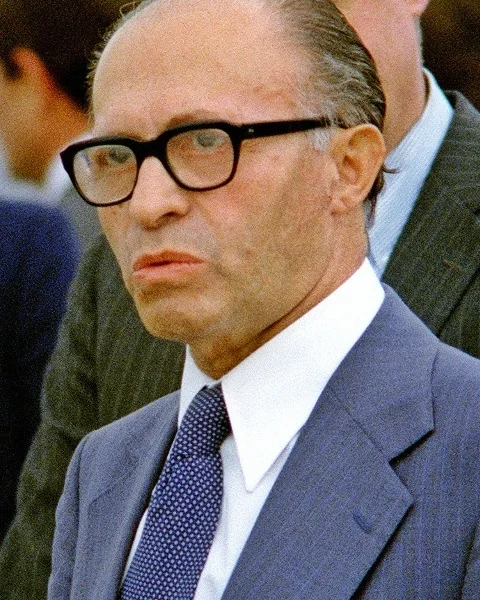
Signing of the Egypt–Israel peace treaty – AP clip
Signing of the Egypt–Israel peace treaty, Washington, 26 March 1979 – short archive clip
3-minute taste
We are not asking you to be convinced. Just six facts worth knowing before you decide it is impossible.
For the sceptical, the disappointed and the angry. Nobody asks you to be convinced, only to check.
Signing of the Egypt–Israel peace treaty, Washington, 26 March 1979 – short archive clip
Stop 1 of 6 on the full path
"Do they really want peace?" each side asks, and many on both sides fear the same answer.1 The answers here make no promises; they say what is known and what is not.
Go to this stop: Hard questions, honest answersStop 2 of 6 on the full path
In 1981 Sadat was assassinated; the documented motives of his killers included the visit to Israel and Camp David.2 In 1995 Rabin was assassinated by an opponent of the Oslo process.3 The peace treaty with Egypt survived the assassination.
Go to this stop: Violence, terror and the damage to peaceStop 3 of 6 on the full path
The peace with Egypt was signed in 1979,4 and the two countries have not fought since. As of August 2026, even amid deep tension, security coordination still works.5
Go to this stop: Egypt–Israel Peace TreatyStop 5 of 6 on the full path
Peace with Egypt came after eight years of attempts, from the Jarring proposal in 1971 to the treaty in 1979.64 Ideas from failed talks came back in the next round.
Go to this stop: Tried, and tried again: the attempts that paved the roadStop 4 of 6 on the full path
France and Germany,7 Northern Ireland,8 South Africa: each was once said to have no solution. No peace there is perfect.
Go to this stop: It has happened before: conflicts that became peaceStop 6 of 6 on the full path
Next to every substantive claim on the site is a small number that leads to its source. At the last stop: how to check a claim in five steps.
Go to this stop: How to check us: a source in five stepsYes, there are difficulties in peace, there are. There are pains in peace, there are. There are sacrifices for the sake of peace, there are. All of them are preferable to the victims of war!
Knesset plenum, Jerusalem, 2 March 1982: the Prime Minister's reply to a no-confidence motion by the Tehiya faction, which demanded a halt to the withdrawal from Sinai, in the weeks before the withdrawal under the peace treaty with Egypt was completed.
Wording in the source: כן, יש קשיים בשלום, יש. יש מכאובים בשלום, יש. יש קורבנות למען השלום, יש. כולם עדיפים מקורבנות המלחמה!
The wording as quoted in Yedioth Ahronoth (ynet, 2017). The speech is catalogued in the Begin Heritage Center's database of Begin's writings (65th sitting of the Tenth Knesset). In public memory the sentence is sometimes shortened to "the difficulties of peace are better than the agonies of war". The Hebrew uses one word for both "sacrifices" and "victims".
Quote source: Yedioth Ahronoth / ynet (Yehuda Nuriel), quoting the Knesset speech of 2 March 1982
You do not have to agree with us. That is what the sources are for: open them, compare and check for yourself.