The London Agreement (Peres–Hussein)
Talks without agreementEnded without agreement
An unofficial understanding between two leaders, reached at a secret meeting. Israel's government never adopted it, so it did not become a binding agreement.
In one sentence
To open peace talks between Israel, Jordan and Palestinian representatives, under the umbrella of an international conference.
In 30 seconds
In April 1987 Foreign Minister Shimon Peres and King Hussein met secretly in London and agreed on an international conference to open direct talks.1 Prime Minister Yitzhak Shamir rejected the understanding, and it was never carried out.1 The door between Jerusalem and Amman stayed open all the same.2
Where it stands today
The understanding was not adopted and not implemented.1 Seven years later, in 1994, Israel and Jordan signed a peace treaty.3
Status checked on
The challenge
King Hussein had been meeting Israelis in secret since the 1960s.2 Officially, the two countries were at war. Jordan wanted an international framework to back the negotiations.1 In Israel, Peres as foreign minister and Shamir as prime minister sat in the same government, and they disagreed about the very idea of such a conference.1
The road there
- Peres and Hussein meet in London and reach the understanding.1
- The inner cabinet meets and breaks up without a decision. Expecting a five-five tie, Peres does not put the proposal to a vote.4 The understanding is not adopted.1
- An international conference finally meets in Madrid.1
- Israel and Jordan sign a peace treaty.3
The people
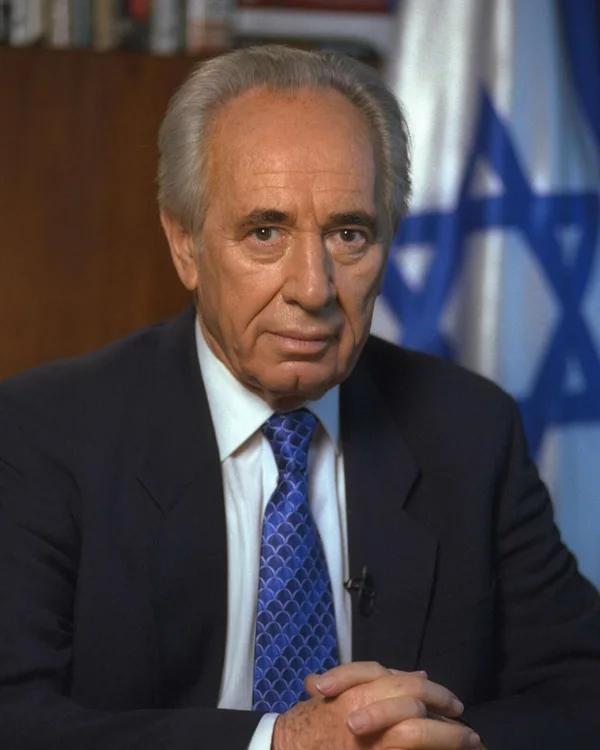
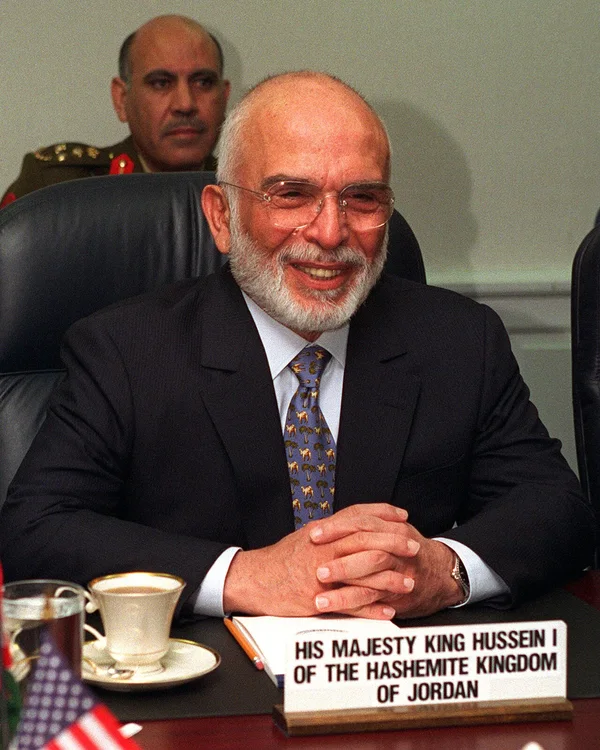
What the understanding contained
- An international peace conference with Israel, the Arab states and the permanent members of the Security Council, based on Resolutions 242 and 338.1
- The conference would lead to direct talks between the sides, and would neither impose a solution nor veto what they agreed.15
- Palestinian issues would be discussed with a joint Jordanian–Palestinian delegation.1
- Everyone taking part would accept Resolutions 242 and 338 and renounce violence and terrorism.5
The geography
How to use the map
Choose a country on the map or in the list. One finger scrolls the page; two fingers move and pinch the map. You can also use + and −. For one-finger map dragging, enable the button above. Keyboard: arrows to pan, + and − to zoom, Home to reset.
Layers
Classification follows the original research as of 7 Oct 2026. This schematic map is not a legal boundary map or a live update.
- International boundary agreed in a peace treaty
- Treaty line with Jordan, “without prejudice to the status” of the territory beyond it
- 1949 armistice line (“Green Line”) — not an agreed final border
- “Blue Line” — UN line of withdrawal (2000), not a border
- Ceasefire / disengagement line with Syria (1974)
- Other international boundary
- West Bank and Gaza Strip: permanent status not agreed
- Golan Heights: held by Israel since 1967; annexation not recognised by the UN
- UN area of separation (UNDOF); Israeli army positions inside it since December 2024
Schematic map. Lines are approximate and are not a legal determination. Data: Natural Earth (public domain), 1:10m scale; line classification and place names by this site. Lines as of October 2026. Peace map
The hard decisions
- Peres went to the meeting with the prime minister's authorisation, but Shamir rejected what was agreed there.1 King Hussein was left with an understanding that Israel's government did not stand behind.
- Shamir feared that an international conference would force Israel to give up land, and the Likud opposed giving up territory on ideological and security grounds.46 He even sent Moshe Arens to Washington to persuade the Reagan administration not to back the move.6
- The paper itself said it needed the approval of Israel's government and would be presented as an American proposal.5 The meeting stayed secret, and at the end of April Peres publicly denied that it had taken place.6
Where accounts differ
- According to Yitzhak Shamir and the Likud
- An international conference would force Israel into giving up land it cannot accept.4
What was carried out 0
—
What was not 1
- The conference was not convened and the planned negotiations did not open.1
What remains open
Sources
Open the sources, compare and check for yourself.
What can this source tell us?
A document shows what was written; testimony tells what someone saw or remembers; research and reporting add interpretation and comparison. Always ask who produced the information and what still needs checking. The label alone does not establish quality, and two sites copying one document still give you one source.
Practise checking sourcesShow all sources (6)Hide the sources
Cited on this page
- Peres-Hussein London Agreement (1987)Research Economic Cooperation Foundation (ECF)
- Moshe Zak, Thirty Years of Clandestine Meetings: The Jordan-Israel Peace TreatyResearch Middle East Quarterly, vol. 2 no. 2 (Spring 1995)March 1995
- Treaty of Peace between the State of Israel and the Hashemite Kingdom of Jordan, 26 October 1994Primary United Nations (UNISPAL)26 October 1994
- Joel Greenberg, Mideast peace parley: For divided Israeli Cabinet, breaking up is hard to doPress The Christian Science Monitor14 May 1987
- Peres–Hussein London Agreement – English textPrimary Economic Cooperation Foundation (ECF)11 April 1987
- Mary Curtius, Israeli split widens over peace talksPress The Christian Science Monitor29 April 1987