Room for Peace

Israel and EgyptJerusalem

Sadat's Visit to Jerusalem

Visit or conferenceHistorical event

A political visit with speeches in the Knesset, not an agreement: nothing was signed.

In 30 seconds

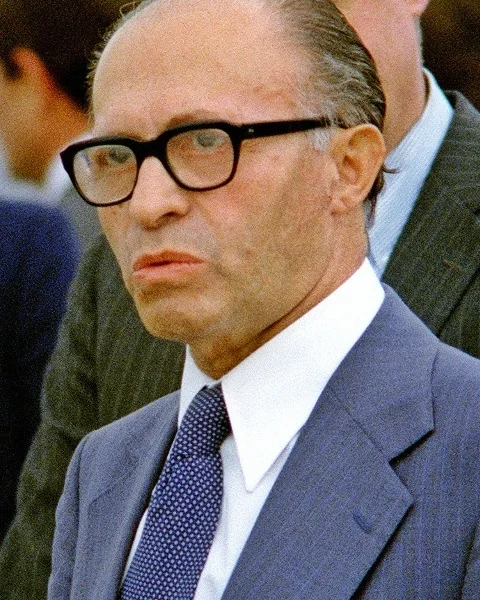
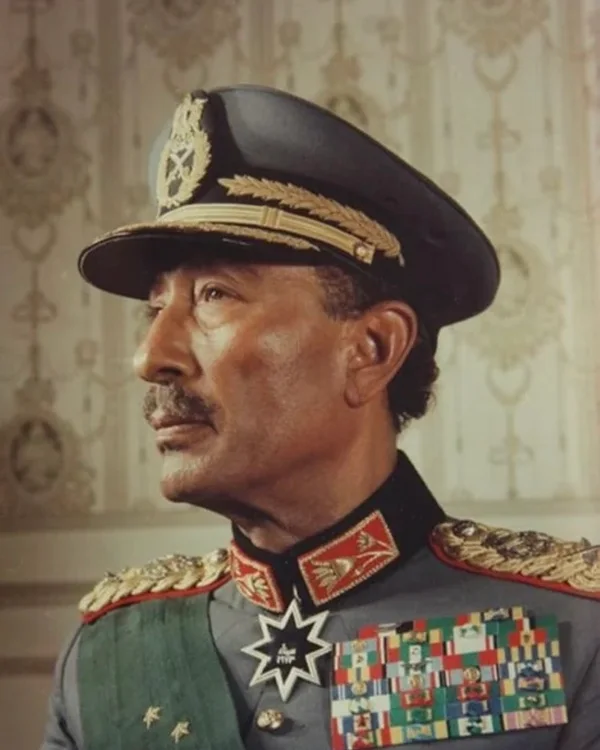
On 19 November 1977 Egypt's President Anwar Sadat landed in Israel, and the next day he spoke in the Knesset. No Arab leader had ever come openly to Israel to talk about peace. Nothing was signed, but the visit opened the road to Camp David and the peace treaty.

Where it stands today

A historical event. The negotiations that followed led to the Egypt–Israel Peace Treaty in 1979.

In one sentence

To break the wall of fear and show that an Arab leader and Israel could talk face to face, in public.

The challenge

Egypt and Israel had fought four wars in 25 years. Even after the disengagement agreements, Israel held most of Sinai and no Arab state recognised it.

The visit did not come out of nowhere. It crowned years of contacts and attempts. Under Golda Meir, Egypt and Israel answered the UN envoy Gunnar Jarring in 1971, and the gap stayed open.1 After the 1973 war her government signed the first disengagement agreement,2 and Yitzhak Rabin's government added the 1975 interim agreement.3

Morocco became a quiet meeting place. According to the Rabin Center, Rabin was the first Israeli prime minister to visit the King of Morocco in secret.4 There, on 16 September 1977, Foreign Minister Moshe Dayan met Egypt's Deputy Prime Minister Hassan Tuhami, with King Hassan II present.56

The road there

  1. Sadat offers to reopen the Suez Canal if Israel pulls back.7 Egypt tells Jarring it is ready for a peace agreement; Meir's government replies that it will negotiate on everything but will not return to the pre-1967 lines.1
  2. The first disengagement agreement is signed, under Meir's government.2
  3. The interim agreement is signed, under Rabin's government.3
  4. Dayan and Tuhami meet in secret in Morocco.5
  5. Sadat tells Egypt's parliament he is ready to go to the Knesset itself. Begin sends a formal invitation, and Sadat accepts.6
  6. Sadat lands in Israel for a visit of about 36 hours, most of it in Jerusalem.89
  7. Sadat visits Al-Aqsa Mosque, the Church of the Holy Sepulchre and Yad Vashem, then speaks in the Knesset. Begin replies.86

The people

Negotiated
Moshe Dayan

What was said

  • Sadat called for an end to the occupation of the land taken in 1967, including Arab Jerusalem.10
  • He demanded self-determination for the Palestinians, including a state, and called the Palestinian question the heart of the conflict.10
  • He rejected a separate Egypt–Israel peace. Yet he said Egypt accepted Israel as a neighbour in a lasting, just peace, with secure borders and guarantees for all.10
  • Begin answered that Israel had always wanted peace. He proposed talks between equals with no preconditions, and invited Syria, Jordan and Lebanon too.11
  • Begin rejected the claim that Israel had taken foreign land, and described a peace of ambassadors and open borders.11

Read the document

The geography

100%
Schematic map of Israel and its neighbours with line typesWest BankJerusalemTel AvivRamallah

Choose a country on the map or in the list. Use + and − to zoom. On touch screens, enable gestures to drag and pinch; scroll the page outside the map. Keyboard: arrows to pan, + and − to zoom, Home to reset.

Layers · Legend
  • International boundary agreed in a peace treaty
  • Treaty line with Jordan, “without prejudice to the status” of the territory beyond it
  • 1949 armistice line (“Green Line”) — not an agreed final border
  • “Blue Line” — UN line of withdrawal (2000), not a border
  • Ceasefire / disengagement line with Syria (1974)
  • Other international boundary
  • West Bank and Gaza Strip: permanent status not agreed
  • Golan Heights: held by Israel since 1967; annexation not recognised by the UN
  • UN area of separation (UNDOF)

Classification follows the original research as of 7 Oct 2026. This schematic map is not a legal boundary map or a live update.

  • International boundary agreed in a peace treaty
  • Treaty line with Jordan, “without prejudice to the status” of the territory beyond it
  • 1949 armistice line (“Green Line”) — not an agreed final border
  • “Blue Line” — UN line of withdrawal (2000), not a border
  • Ceasefire / disengagement line with Syria (1974)
  • Other international boundary
  • West Bank and Gaza Strip: permanent status not agreed
  • Golan Heights: held by Israel since 1967; annexation not recognised by the UN
  • UN area of separation (UNDOF)

Schematic map. Lines are approximate and are not a legal determination. Data: Natural Earth (public domain), 1:10m scale; line classification and place names by this site. Lines as of October 2026. Peace map

The hard decisions

  • Sadat broke an Arab taboo: he came to Israel, spoke to its parliament and recognised it in public.10
  • Not everyone in Cairo agreed. Foreign Minister Ismail Fahmy resigned in protest at the trip, and his resignation was announced two days before it.12
  • The two speeches showed how far apart the sides still were, above all on the Palestinians and on Jerusalem.1011

What remains open

  • The visit showed that one leader's bold gesture can change what seems possible. Closing the gaps still took long months of talks and American mediation.

Photos, videos and quotes

Menachem Begin

In the spirit of the Nobel Prize tradition we gave to each other the most momentous pledge: No more war. No more bloodshed. We shall negotiate and reach agreement.

Nobel Lecture, Oslo, 10 December 1978. Begin presents the words as a pledge he and Sadat gave each other – so the wording predates the peace treaty signing ceremony.

Source and status of the wording

Official Nobel Foundation text, in English; consecutive sentences.

Quote source: The Nobel Prize (Nobel Foundation)

Anwar Sadat

I come to you today on solid ground, to shape a new life, to establish peace.

Address to the Knesset, Jerusalem, 20 November 1977

Source and status of the wording

Sadat spoke in Arabic. In the Arabic edition the sentence is given in his own words, as quoted by Al-Ahram's news gate (19 November 2014). The Arabic says literally "on two firm feet"; "on solid ground" is the wording of the English translation published by Israel's Ministry of Foreign Affairs, as reproduced by the Jewish Virtual Library.

Quote source: Jewish Virtual Library, reproducing Israel Ministry of Foreign Affairs

Anwar Sadat

Yet, today I tell you, and declare it to the whole world, that we accept to live with you in permanent peace based on justice.

Address to the Knesset, Jerusalem, 20 November 1977

Source and status of the wording

Sadat spoke in Arabic. The source is the English translation published by Israel's Ministry of Foreign Affairs, as reproduced by the Jewish Virtual Library.

Quote source: Jewish Virtual Library, reproducing Israel Ministry of Foreign Affairs

Sadat lands at Ben Gurion Airport – AP raw footage

· AP Archive

It was the first open visit by an Arab leader to Israel, only four years after the 1973 war. The visit opened the negotiations that led to the Egypt–Israel peace treaty of 1979.

Sadat's visit to Israel – Kan News retrospective

· כאן | חדשות - תאגיד השידור הישראלי

This is how the visit looked to Israeli viewers: the Egyptian president's landing, his Knesset speech and Prime Minister Begin's reply. In under two days, what had seemed impossible became open negotiation.

Sadat's Knesset speech in Arabic – excerpt, ON channel

· ON Live

Sadat addressed the Knesset in Arabic, and the speech was broadcast worldwide. Alongside his call for peace he set out the Arab demands: withdrawal from the territories occupied in 1967 and a solution to the Palestinian question.

Sadat's visit to Israel: AP footage

· AP Archive

Four years after a war, Egypt's president came to Jerusalem. What had seemed impossible became open dialogue within days.

Sadat and Begin's joint press conference

· AP Archive

The two leaders declared there would be no more war between Egypt and Israel, even though the gaps over a full settlement were still wide.

Sadat reports to Egypt's parliament on his Israel visit

· AP Archive

Sadat's move won wide support in Egypt and sharp opposition in parts of the Arab world. In this speech he set out to explain it to his own people.

Great Knesset moments: Sadat's visit and peace with Egypt

· The Knesset

The Knesset was the stage of the historic moment: Sadat's speech, Begin's reply, then the debates and votes on the agreements.

The Ismailia summit: Sadat and Begin keep talking

· AP Archive

It was the first visit by an Israeli prime minister to Egypt. The summit ended without a joint statement, and the gap between the sides eventually led to Camp David.

Sadat addresses the Knesset – AP raw footage

· AP Archive

Sadat's address to the Knesset, Jerusalem, 20 November 1977 – raw archive footage

Sadat arrives in Israel – short AP archive clip

· AP Archive

President Sadat's arrival in Israel, 19 November 1977 – short archive clip

Begin and Sadat's press conference in Jerusalem

· AP Archive

Begin–Sadat press conference after the Knesset speeches, Jerusalem, November 1977.

Sources

You do not have to agree with us. That is what the sources are for: open them, compare and check for yourself.

  1. Primary United Nations (UNISPAL) · 30 November 1971
    Report of the Secretary-General on the activities of the Special Representative to the Middle East (S/10403), 30 November 1971
  2. Primary United Nations (UNISPAL) · 18 January 1974
    Letter dated 18 January 1974 from the Secretary-General addressed to the President of the Security Council (Egyptian-Israeli Agreement on Disengagement of Forces)
  3. Primary United Nations (UNISPAL) · 1975
    Yearbook of the United Nations 1975 (excerpts)
  4. Research Yitzhak Rabin Center
    1974 – Prime Minister of Israel, first term
  5. Official archive Israel Prime Minister's Office (minutes reproduced by the Jewish Virtual Library) · 18 October 1977
    Dayan-Tuhami Meeting on September 16, 1977 (minutes dated 18 October 1977)
  6. Official archive Israel State Archives (via diplomatic-documents.org)
    "No More War": The Peace Plan of the Israeli Government and President Sadat's Journey to Jerusalem, November 1977
  7. Official archive U.S. Department of State, Office of the Historian
    The 1973 Arab-Israeli War
  8. Official archive U.S. Department of State, Office of the Historian
    Foreign Relations of the United States, 1977–1980, vol. VIII, Arab-Israeli Dispute, document 152 (editorial note on Sadat's visit to Jerusalem)
  9. Research Center for Israel Education
    Sadat's Historic Visit to Jerusalem
  10. Primary ibiblio (mirror of the speech text) · 20 November 1977
    President Anwar Sadat's Address to the Israeli Knesset, 20 November 1977
  11. Research Menachem Begin Heritage Center · 29 November 1977
    What Begin Told Sadat (Jewish Herald, 29 November 1977)
  12. Official archive U.S. Department of State, Office of the Historian
    Foreign Relations of the United States, 1977–1980, vol. VIII, Arab-Israeli Dispute, document 147: Memorandum of Telephone Conversation (Carter–Begin), with a note on the resignation of Foreign Minister Fahmy

Further reading